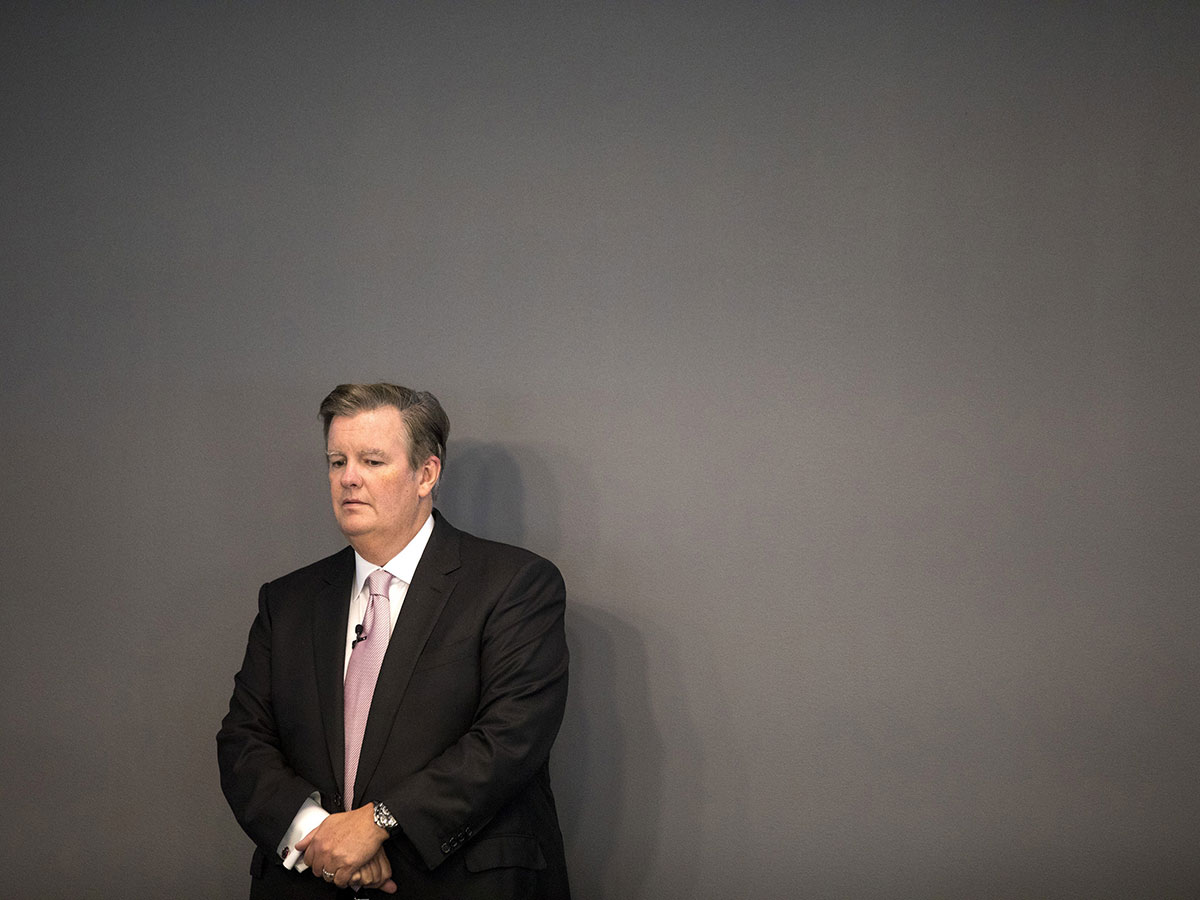

How James Johnson Is Building Canada’s Soccer Business

When James Johnson resigned as head of Australia’s national football league to take over Canadian Soccer Business (CSB) last year, he walked into a house on fire. Despite both the national teams and the sport itself defying expectations on the pitch, recent tensions surrounding the organization, which oversees the commercial aspect of the sport, had overshadowed the on-the-field success.
Under a contract signed in 2022, CSB paid Canadian Soccer, the national governing body for soccer, a flat $4 million per year, a figure widely viewed as a pittance compared to the revenue it was generating from sponsorships. The players cried foul, with the men’s team going on strike and the women launching a $50 million lawsuit. At the same time, CSB was locked in a dispute with Rogers Communications, which refused to carry its affiliated soccer broadcast channel, OneSoccer, on basic cable, limiting the sport’s reach. Johnson was tasked with cleaning up the situation in just over a year ahead of Canada co-hosting the 2026 FIFA World Cup.
Those games are now afoot, and Johnson has addressed many of the challenges he inherited. A new deal with Canada Soccer has solved the revenue-sharing disputes at the heart of the conflict, the Canadian Radio-television and Telecommunications Commission (CRTC) is forcing Rogers to play ball, and the CSB has been rebranded as Canadian Soccer Media and Entertainment (CMSE). We spoke with Johnson about how he turned the ship around, his plans for the business side of the sport, and why he thinks Canada represents the greatest opportunity in world soccer.
What do you see when you look back at one year on the job?
Coming into this role, we had a short runway to the World Cup. We had to run fast, but we were held back by our existing agreement with Canada Soccer, and the longstanding issue with Rogers and the OneSoccer channel. As an executive team, we really focused on solving those issues so we can grow. Internally, we defined a vision and values for the organization in our first six months, and rebranding as CSME was a way to execute on those. We’re drawing a clear distinction between who we were, who we are now, and who we’ll be going forward.
How was the agreement with Canada Soccer holding CSME back?
When I arrived from Australia, I was struck by the level of distrust in the Canadian soccer ecosystem. There was a whole history here that was foreign to me, and the only way to navigate it was to ask questions, listen and hear things we didn’t want to hear. Through that work, we arrived at a deal that works for both parties. We want Canada Soccer to grow and the national team to perform, and they want us to sell their rights at the best dollar possible. We’re aligned.
When you look at the past year, do you see any missteps or things you wish you’d done differently?
There’s always missteps. I wish we had more time to prepare for the World Cup, and that we had the deal with Canada Soccer done before the end of 2025. I believe in a culture of continuous learning. Rest assured, at the end of every weekend, we’re asking why we didn’t get more people at a game, or hit higher broadcast numbers.
Soccer is growing in Canada, but it’s far from being our number-one sport. How do you plan to change that?
All the right ingredients are there for that to happen. A thriving soccer ecosystem means high grassroots participation and success on the pitch for our national teams. Canada is doing great in both areas, for men and women’s soccer alike. Success also means the leagues connecting with the community, through both the Canadian Premier League (CPL) and the National Super League (NSL), and there’s a lot of room for growth there. Add the World Cup, and Canada represents the biggest opportunity in world soccer, worldwide.
That’s a big statement, considering just how much bigger soccer is in several other countries. What lessons can Canadian soccer learn from those places?
We need to be open to different ways of bringing in investment. We’re a sport, but we need to think like a business. We need to ensure that the sport is visible, whether that be through sponsorship agreements or broadcast reach, so that the sport is placed where normal Canadians go day to day. And it means bringing in more sponsors, and setting up the governance structures that incentivize capital to come into the sport. CSME holds both the national team commercial rights and the top tier competition commercial rights. That’s a great signal to investors all over the world.
Under your new agreement with Canada Soccer, how would that new revenue benefit the sport?
We want the CPL’s clubs to be well funded so they can engage with their communities. Likewise, we want to incentivize communities to go to matches so the energy at games is better. More bums in seats means a better show on broadcast, which creates a product more people want to watch. That in turn leads to better playing times, better high performance programs, and better performances by the teams. The more they succeed, the more we can invest in marketing, which boosts revenue even further. Investment drives that whole engine.
Bums in seats has been a challenge: in November 2025, you made the decision to shut down the Winnipeg Valour FC. What does that say about the challenges Canadian soccer is facing right now?
That says more about my leadership style than it does the strength of the game. This issue had been bubbling for some years, and as incoming CEO, I felt I had to be decisive and rip off the bandaid. It does not mean, however, that Winnipeg will never have a CPL team again. We think it’s a fantastic market. It just needs the right stadium and the right owner. Once those things are in place, I can’t wait to bring the CPL back to Winnipeg. I don’t think that will be too far away.
The CRTC recently decided to force Rogers to carry the OneSoccer channel on basic cable, which you had been pushing for. Will that bring the sport the exposure you’re craving?
It’s a great thing for the business of soccer, for exposure to the sport in the mainstream, and even for Rogers itself: they now get to be behind this growth of the sport at such an important time. We can now show all the properties we license to OneSoccer—the Canadian Premier League, the men’s and women’s national teams, NWSL and Bundesliga—to a very large audience across the country. It’s transformational.
What’s your long-term outlook for Canadian soccer?
We want the CPL to be right at the centre of the Canadian professional sports agenda: more teams, more visibility, more people attending every week. Ultimately, we want to digitize the sport. Historically, it’s been fragmented across the provinces and international leagues. Just as we’re consolidating our commercial rights, we want to create one digital platform, Canadian Soccer Central, to put everything in one place. We hope to launch that in 2027.
Are you ready for the World Cup?
We’re as ready as we can be. I’m very excited to see how [Canada’s national team] coach Jesse Marsch and the team do on the pitch. I hosted the FIFA Women’s World Cup in 2023 as the CEO of Football Australia, so I know how much pressure home teams can be under. That’s often a good thing, because it elevates their performance. And here at CSME, we’ve entered into seven brand partnerships since the new agreement went live in February, including with Samsung, General Mills and Uber Eats, and gained Walmart and Michelob Ultra as sponsors—both companies who are not only investing revenue into the sport, but are also building its identity in the mainstream. Things are in a good spot, and we’re well positioned for all the investment we expect to come in after the games conclude.
Related: Making the World Cup Work for Communities
How will the World Cup help meet CSME’s goals?
One of FIFA’s mandates is to help football grow in all parts of the world. Having been a senior executive there, I know that Canada is a strategic focus for them, because soccer can become one of the strongest sports in the country. A co-host of the World Cup, FIFA’s crown jewel will soon be in the hands of Canadians. Unlike the U.S. and Mexico, Canada is hosting these games for the very first time. I believe Canada will be the legacy story of the World Cup, and we’re well positioned to ride that wave.
Editor’s note: Canadian Business is owned by St. Joseph Communications, which is a media sponsor of Canadian Soccer Media and Entertainment.