
How I Created a Plant-Based Solution to Replace Plastic
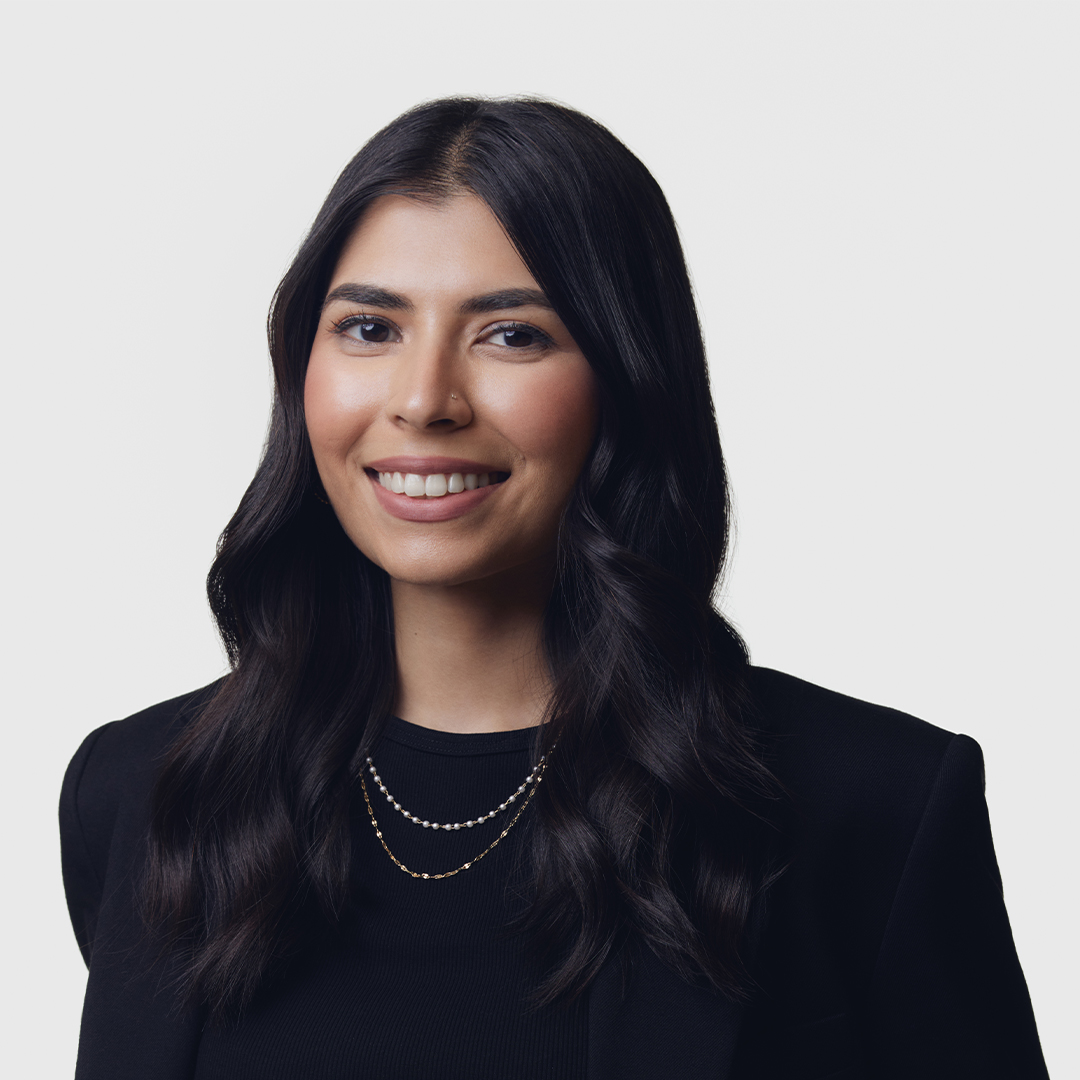
My family came from India, but I was born in Dubai back when it was still a desert. When I was young, we moved to Ottawa, where my parents taught me the importance of giving back to our community. At school, I was always leading bake sales and running charity drives, though I didn’t yet realize that social impact and business could align to form a career. Coming from a family of accountants, I chose to study accounting at the University of Toronto in 2014.
My older brother, a student at the University of Ottawa, told me about a social entrepreneurship club called Enactus, which brings together students from different disciplines to develop business solutions for social issues. I joined my university’s chapter, where I was first introduced to entrepreneurship. We studied global problems, researched why they persisted, and turned our findings into social impact projects.
In my second year of university, the club attracted several corporate sponsors seeking student-led solutions to food waste. One of them was McCain Foods, which was struggling with significant waste from its French fry production. It was 2016, a year when awareness around plastic pollution was growing. I remember reading a World Economic Forum prediction that by 2050, there would be more plastic than fish in our oceans. I was shocked that, despite our strides in sustainability, the future still looked so bleak.
A few of us at Enactus began researching how starch and other potato byproducts could replace plastics. Seeing an opportunity to address two problems—food waste and plastic packaging—with one solution, we pitched our concept to McCain, which immediately agreed to fund the research. I incorporated the project as a non-profit, EcoPackers, creating non-toxic packing peanuts from plant materials, and became its CEO. I started experimenting in my kitchen to turn starch into plastic, and building prototypes using the university’s facilities. That experience became the springboard for erthos—the climate technology company I now lead, focused on developing sustainable materials and technologies to replace plastics at scale.
In 2018, two brilliant co-founders joined me full-time. Just before my graduation, we developed a working plastic-like prototype that finally looked and felt like plastic, not just goo or dough, and incorporated as a for-profit company. By then, I had an accounting job offer at EY and faced a tough choice: pursue the stability of a paycheque or continue building the company. My parents hoped that I’d follow the path of the rest of our family, but I was determined to grow the business. They gave me a year to make it work.
That summer, we were accepted into NEXT Canada, an accelerator, and soon after joined the University of Toronto’s Creative Destruction Lab, one of 12 campus programs supporting young founders. Over the following months, we bootstrapped the business and advanced our research. To expand, we needed institutional investors—but as newcomers, they doubted our materials were truly natural and sustainable. To prove it, I started eating the packing peanuts in front of them. They tasted a bit like popcorn.
Many investors initially said no, but I focused on building relationships and trust. Eventually, some of those same skeptics took a chance on us. We closed our seed round on my wedding day–signing the papers with Horizons Ventures just an hour before walking down the aisle, after a morning spent on the phone with my lawyers while getting my hair and make-up done.
Next, we set out to make our technology compatible with the world’s existing infrastructure. We wanted to prove we could grow globally, but every Canadian manufacturer said no. They worried our materials would damage their equipment—sustainable materials had a reputation for being costly, sticky, and disruptive to production lines. It only took one partner to take a chance and run our material through their industrial equipment. Based in Shenzhen, China, we booked one-way plane tickets and relocated. Working there, a global hub for plastics, allowed us to develop our technology alongside our partners.
We eventually realized we wanted to replace plastic on a larger scale. Each year, over 460 million metric tonnes of plastic are produced globally—in 2019 alone, plastic production generated 1.8 billion tonnes of greenhouse gases—and only about nine per cent was recycled. The rest can take 100 to 1,000 years to decompose, meaning every piece of plastic ever made still exists somewhere on Earth. So in 2019, we pivoted from packing peanuts to next-generation resins, broadening our materials beyond starches to other advanced bio-based materials that could replace conventional plastics.
In 2021, we rebranded EcoPackers as erthos to reflect our broader mission, choosing a name that honours both the Earth and the ethos driving our work—a commitment to materials that put the planet first. By 2023, we had secured $11.2 million in funding, including our 2019 seed round and Series A. Today, we work with leading consumer goods companies, earning revenue through formulation projects and licensing our material technologies. We’ve intentionally focused on legacy players, and every client we’ve secured is a top 20 global CPG company—companies that might never have tried alternative materials on their own.
We’ve collaborated with major brands like AB InBev, ITW, and Colgate-Palmolive, which usually choose from thousands of plastic grades. Each brand has unique requirements—how their packaging should look or how their toothbrushes should feel. Bioplastics and biomaterials offer far fewer options, so when a brand comes to us with, say, a shampoo bottle that needs compostable, bio-based packaging, we determine the right combination from our materials database, now containing over 100 ingredients, including agricultural fibers and industrial biopolymers. Our goal is to de-risk the sustainable materials landscape and demonstrate that, when engineered properly, these alternatives can be highly valuable.
As a start-up, we couldn’t afford a year of trial and error to develop a new formula, so we built our own optimization tools. My co-founder and Head of Product, Kritika Tyagi, a plant biologist, developed an AI platform called ZYA that analyzes the structure of our materials and predicts how they will break down. Initially for internal use, ZYA has since become a tool for our clients. Colgate-Palmolive now uses it to support their own innovation.
Related: Are Reusable Grocery Bags Any Better for the Planet Than Single-Use Ones?
I started this business nine years ago. Now, it’s 2025—the year many companies had aimed to hit their sustainability targets and transform their supply chains. Under the New Plastics Economy initiative, more than 250 brands, governments, and other organizations were meant to ensure that all plastic packaging could be reused, recycled, or composted. We’re still far from that goal. While it’s frustrating, it has only strengthened my drive to accelerate our work. That’s why we’re taking the risk of sharing our AI tools, our competitive advantage, so others can use them too.
Plastics are a core part of our daily lives. In the last 20 years alone, global production has doubled. While plastic has brought many benefits, it has also caused serious harm. At erthos, our dream is to make sustainable materials the norm. Today, they account for only 0.5 per cent of the total market. Five years from now, I hope we can confidently say that bio-based solutions and sustainable materials make up the majority of what we use. That’s the world I want to wake up to.
– As told to Jadine Ngan