
How Green Building Can Tackle the Housing Crisis
Canada’s housing crisis is often framed as a supply problem. After 15 years of working in construction–first as a civil engineer designing fabricated building products, and later leading engineering, project management, and innovation teams within a large corporation, I’ve come to see it just as much a productivity problem.
Growing up, I always loved math and was drawn to working with physical structures where I could see the tangible results of my work. I pursued a degree in civil engineering in Iran, which led me to the construction industry. After moving to Montreal in 2006, I continued building my career, and over time, my perspective evolved as I saw how slowly the sector adopts innovation.
The country is currently trying to meet 21st-century demand for housing with 20th-century building methods. Even with recent gains, Canada is still far from building enough homes to improve affordability. A recent Canada Mortgage and Housing Corporation analysis suggests the country needs to build nearly double the current input–roughly 430,000 to 480,000 homes annually–to return to pre-crisis affordability levels. With rising costs, tightening labour market, and surging demand, the construction industry’s role has become impossible to ignore.
During the COVID-19 pandemic, as home prices across the country surged, I was leading innovation initiatives at a large construction company. Around my 40th birthday, I began reflecting on my career and the impact I was making. I realized I hadn’t come this far to remain in a routine corporate role with limited impact. In September 2023, I resigned and incorporated PakVille, my sustainable construction company focused on reducing building time and costs. My aim was to build faster and more efficiently to improve housing affordability.
Working with some family members as co-founders, we entered the prefab housing market, where homes are manufactured off-site in controlled factory settings before being transported and assembled on location. We believed that off-site manufacturing offered the most promising way to lower construction costs. But we quickly hit limits: outsourcing fabrication drove up costs, and transporting large pre-assembled sections proved expensive. Shipping, coordination, and facility fees pushed the total beyond conventional builds.
To achieve real change, we knew we had to rethink the system. Construction is one of the most emissions-intensive industries globally. Traditional materials carry heavy environmental footprints: timber emits roughly 276 kg CO₂ per cubic metre during production, whereas concrete emits about 382 kg CO₂ per cubic metre. Traditional construction involves up to seven separate components, including insulation, plywood, vapour barriers, and drywall, which are installed sequentially by different trades. Delays in any phase ripple through the project, increasing labour costs and timelines. With labour shortages and rising material prices, this approach is slow and expensive.
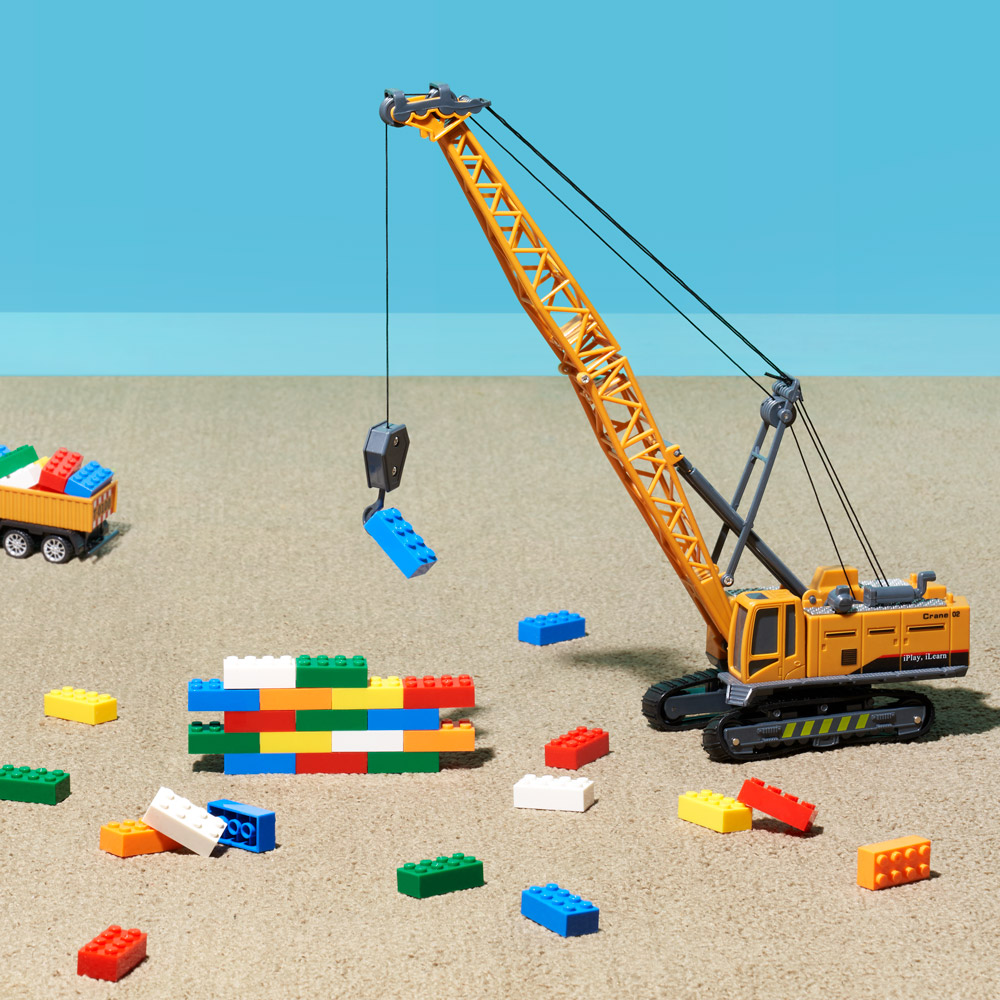
To solve this, we searched for a lightweight material that combined structural strength and insulation into a panel. When we couldn’t find one, we developed it ourselves. Efficiency was our initial goal, but sustainability also became central. We created panels from recycled plastic bottles reinforced with thin fibreglass sheets. Usable for floors, walls, and ceilings, they are assembled on-site like Lego blocks, roughly four by eight feet. Unlike volumetric prefab homes, which are limited by transport constraints, this panelized system offers flexible sizes and designs.
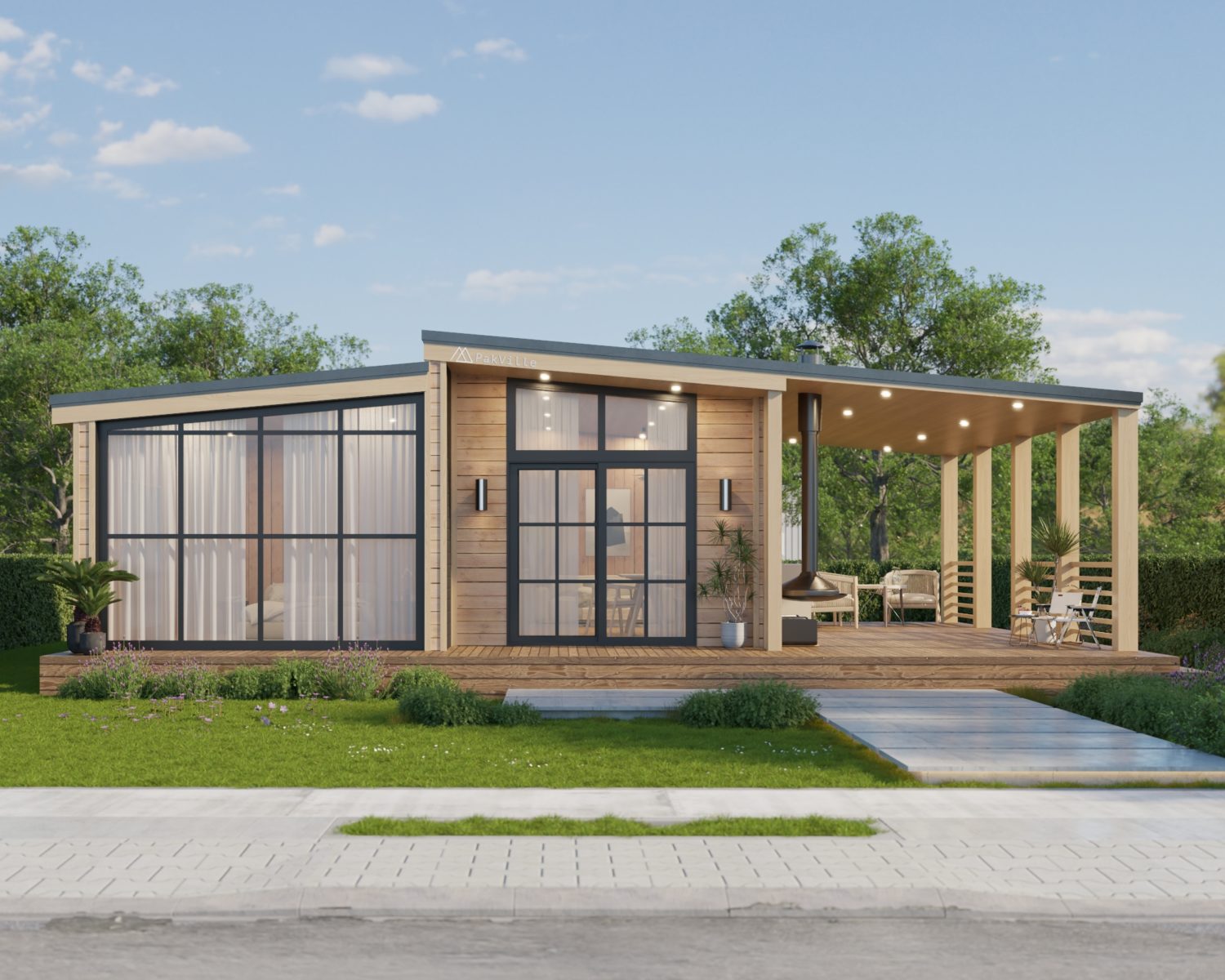
This approach lets us build customizable one- to three-bedroom homes, while drastically reducing construction times. Our homes can be constructed in two to three weeks instead of eight to nine months. By shortening construction time and on-site tradespeople, our internal estimates show total build costs can drop by up to 35 per cent.
Our company is part of a growing group of innovators demonstrating how sustainable materials can be used at scale to address the housing crisis. But product-level innovation alone isn’t enough–Canada’s housing challenge requires scale. The real opportunity lies in mass manufacturing standardized building components like in the automotive industry. At PakVille, we run our own facility, producing high-performance panels at industrial scale, enabling panels to be rapidly deployed across projects, allowing us to scale up and meet housing needs nationwide.
Our goal is to supply 10,000 home kits annually by 2032. These kits are like Lego boxes for houses, including the floor, wall, ceiling panels, doors, windows, and plumbing and electrical components, all packaged with instructions for on-site assembly. In a country currently building roughly 40,000 to 50,000 homes per year, that represents an impactful contribution to national housing capacity.
Scaling housing manufacturing isn’t a niche ambition–it’s necessary if we want to truly increase supply. Construction has always been a conservative industry, which makes sense given the importance of safety standards. Still, adaptability is essential when trying to change a system.
Related: Is There a Sustainable Solution to the Lithium-Battery Shortage?
To move forward, stronger government policies that incentivize sustainable and cost-effective construction could accelerate this transition. When electric vehicles first entered the market, the government introduced financial incentives to help offset costs and encourage early adoption, building momentum for the industry. A similar approach in construction–offering credits or rebates for materials with high recycled content or measurable emissions reductions–could encourage developers and homeowners to adopt sustainable builders like PakVille more quickly.
Sustainability and competitiveness are not opposing forces. When companies challenge established assumptions and rethink their processes, efficiency and environmental performance often go hand in hand.Canada’s housing crisis demands urgency–and so does climate accountability. By embracing industrial-scale manufacturing, using sustainable materials, and aligning policy incentives with innovation, we can build homes faster, more affordably, and with a lower environmental impact.
— As told to Survi Sahni