
What Shop-In-Shops Can Do to Boost Retail Business

In October 2021, homeware company Fable opened its first store in Vancouver. Located on Water Street in the historically charming Gastown neighbourhood, the location offered shoppers the opportunity to see the brand’s Vancouver-designed, sustainably crafted tableware, ceramics, glassware, and flatware in person.
There was just one problem: “It was not in a crazy obvious place,” says Max Tims, co-founder and head of operations at Fable. The original Gastown store was in a trendy, up-and-coming area, but it sat just off the main shopping strip. “It was difficult to reach walk-by customers who recognized the brand but didn’t realize we had a retail store.”
Founded in 2019 as a digital retailer, Fable now sees roughly 80 per cent sales come from online channels. Still, the direct-to-consumer brand saw physical retail stores as an important complement to its online strategy, which would allow its customers to experience its home goods first-hand. Since the beginning, Tims says the team recognized customers wanted to experience the products in person.
The opportunity emerged after many businesses shuttered during the first year of the COVID-19 pandemic. Tims says the uncertainty in the real estate market meant they could try short-term leases in locations that typically require a five-year commitment. The co-founders began testing brick-and-mortar retail through these flexible arrangements, including hanging drywall and painting to fine-tune the vibe–experiments that provided valuable insights into where Fable’s future stores would thrive.
In contrast to the Vancouver location, Fable’s first Toronto store–opened at the same time–was ideally situated in the heart of Toronto’s trendy Trinity-Bellwoods neighbourhood. It was located smack between established luxury skincare brand Aesop and upscale parfumerie Le Labo on Queen Street West (The Vancouver store later moved to South Granville, which Tims calls a “home decor hub” with more foot traffic).
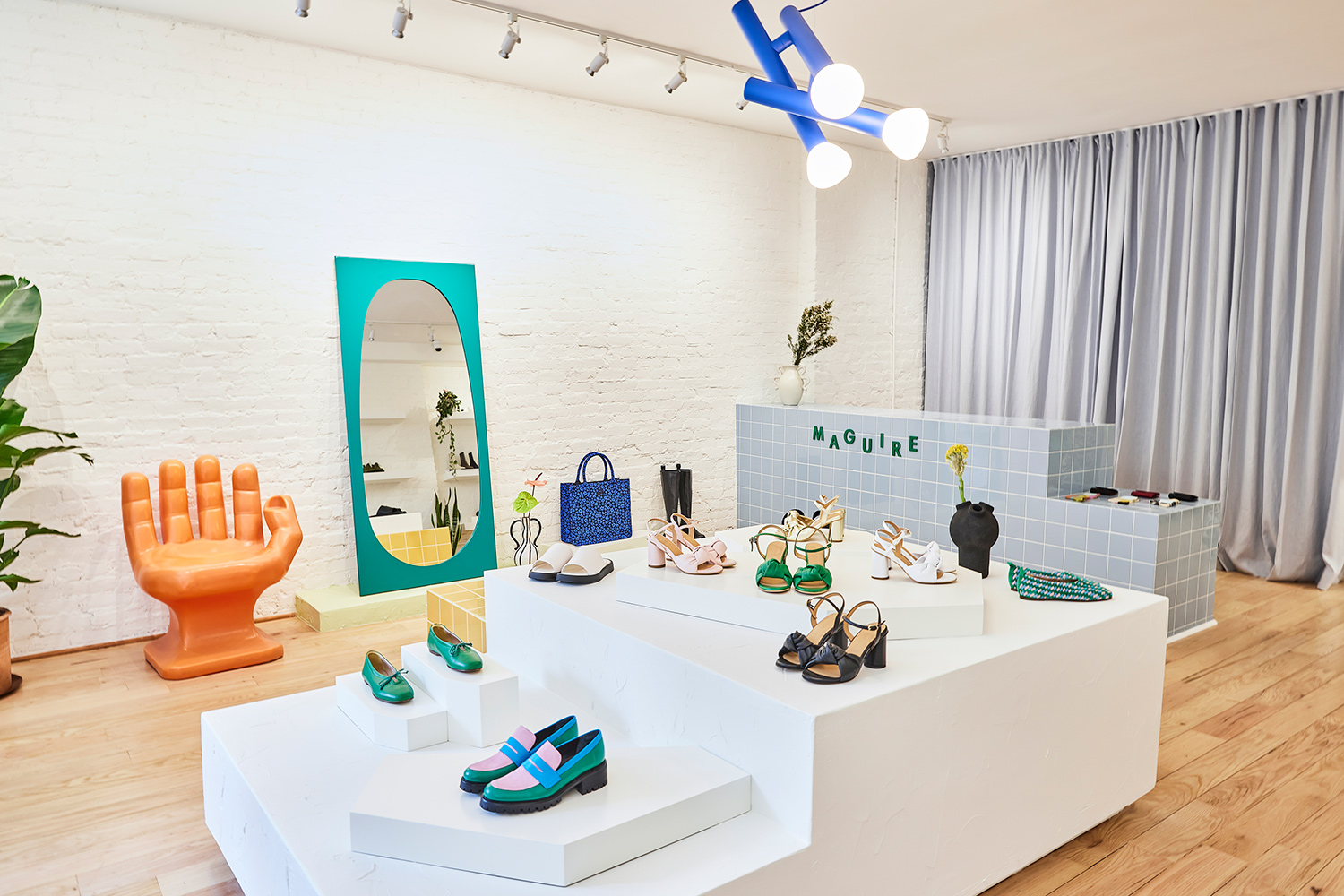
After opening its first two retail locations, the team began brainstorming ways to boost in-store shopping at Fable. One key strategy that emerged was collaborating with other direct-to-consumer Canadian lifestyle brands offering complementary products–like Toronto’s bedding and mattress purveyor Silk & Snow–to launch shop-in-shop initiatives. This growing retail trend involves one brand creating a dedicated space within another’s store. The model helps both brands boost visibility and sales, while providing a creative way to drive foot traffic.
In recent years, brick-and-mortar retailers have faced mounting challenges as ecommerce continues to dominate and operational costs rise. Insolvencies and bankruptcies in the retail sector have been rising since 2020, according to Statistics Canada. As of May 2025, there were 36 recorded insolvencies and 28 bankruptcies in the retail trade sector. Among the most notable closures was Hudson’s Bay, which shuttered 96 stores across the country in June, resulting in more than 9,000 job losses.
Yet, despite these headwinds, a recent study by Leger found that Canadian customers are rediscovering the appeal of in-person shopping. The report found that 54 per cent of customers had rekindled the joy of shopping in-store this year—up from just 24 per cent in 2024. Nearly one in four respondents say they prefer to touch, see, or try a product before making a purchase.
Shop-in-shop success comes down to finding the right match, says Tims—and Fable doesn’t collaborate with just any brand. “We carefully choose partners that promise meaningful mutual value and share a strong alignment of brand vision.” For example, Fable looks for potential collaborators whose customers are similar but not completely overlapping, who share key values—especially around sustainability and B Corp principles—and whose style and aesthetic align well with Fable to create a cohesive shopping experience.
After defining their approach to collaboration, Fable found that connecting with compatible Canadian brands came naturally. According to Tims, this is partly due to the relatively small size of Canada’s ecommerce community: “Every single business without fail has been really excited for another Canadian business to come together and create something better.”
In early 2021, Canadian aromatherapy company Vitruvi appeared in both of Fable’s stores as part of a two-day holiday promotion, during which exclusive tote bags and magazines were given out as perks for in-store shoppers. Tims described the collaboration as a mutually beneficial opportunity that drove traffic and sales for both brands while increasing their exposure.
So far, Fable has created dedicated spaces for like-minded Canadian brands including Silk & Snow, footwear brand Poppy Barley, bodycare company Better Basics, and linen bedding brand Wilet. The brand has also acted as a pop-store within other established companies. In 2023, Fable took its offerings to California, appearing in jewelry brand Mejuri’s store on Abbot Kinney–once called the “coolest block in America” by GQ–to display its products to Los Angeles shoppers. Fable had previously popped up in clothing retailer Kotn’s L.A. store, too.
For shop-in-shop initiatives, Tims says shorter timelines–ranging from a weekend to one week–are beneficial because the limited timeframe creates urgency to visit the store. A full-scale marketing push supports the pop-up, including social posts and email outreach, while exclusive in-store offers help boost excitement and make the experience feel special.
Tims says as a result of these time-bound pop-ups, Fable has seen strong success in both net sales and attracting new customers, while taking home tons of learnings. For example, a 2022 pop-up in the States wasn’t hugely successful, likely due to its remote location and limited customer base to drive new foot traffic. After that experience, Tims says Fable became much more focused on their goals–whether testing a new region for a potential new store one day or securing a spot on a main shopping street to increase brand exposure.
A few months later, Fable partnered with Poppy Barley for a pop-up in a Calgary mall, which attracted significant foot traffic, doubled Fable’s sales goal and even exceeded the stretch target–an experience that Tims says demonstrated the success of pop-ups. Importantly, Fable used the experience to better understand its customer base in Calgary. “We didn’t know if a mall could be a successful place for us,” he says.
Related: Has COVID-19 Changed In-Store Shopping for Good?
Historically, Fable has not charged brands to pop up in its stores and covers any costs related to new signage or displays highlighting the shop-in-shop experience. However, if a visiting brand wants to include special items–like gift bags or drinks–or bring their own staff on-site, the visiting brand would cover those costs.
Looking ahead, Fable is considering which brands to collaborate with for pop-ups in New York City, L.A., and Austin, Texas, since 40 per cent of its online sales come from the U.S. For Tims, shop-in-shop experiences offer a low-risk way for companies to explore new markets, understand consumer behaviour, and help spur growth among complementary brands. “It’s fairly easy to put a test together and gather some learnings quickly–and the risk is low, especially if you’re working with brands you believe in.”