


Innovation, Trust, and the Future of Business in Canada

On October 1, Canadian Business hosted its annual Evolution event at Luma’s dining lounge in TIFF Lightbox, where attendees mingled over wine and hors d’oeuvres before gathering for two major conversations on the forces reshaping Canadian business. The theme was clear from the outset: artificial intelligence is no longer on the horizon. It’s here, rewriting how Canadians work, create, and compete.






A Fireside on Trust
The evening opened with a conversation between Erin Elofson, President of Mastercard Canada, and Eva Wong, Co-Founder and COO of Borrowell, moderated by Canadian Business publisher Jason Maghanoy. Elofson stressed that trust is the precondition for innovation. “Trust is really the backbone of the adoption of technology and new ways of doing things,” she said, pointing to Mastercard’s use of AI to monitor more than five billion daily transactions for fraud and anomalies.

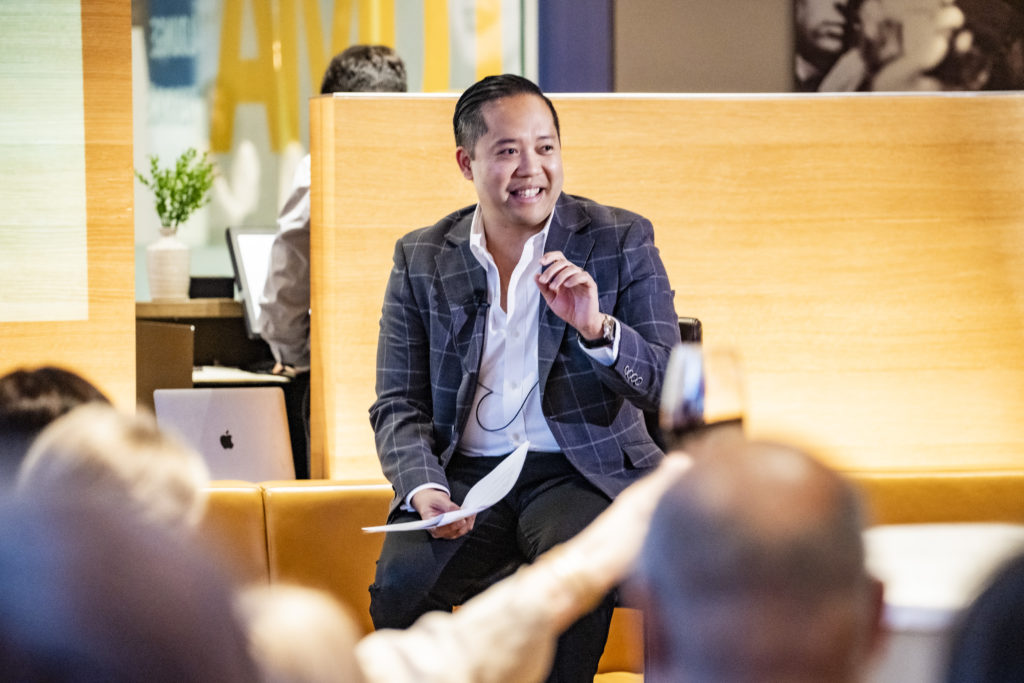
Wong described Borrowell’s early struggle to persuade Canadians to share their financial data online. Credibility, she said, was won step by step, from spotless details on the company’s website to the launch of free credit scores—a gesture that proved Borrowell could deliver real value without hidden strings. “You did what you said you would do. That’s what builds trust,” she said.
Both agreed that innovation and trust are not opposing values but interdependent. As Wong put it, “Trust doesn’t slow innovation down; it enables it.”


That insistence on trust as the foundation for progress set the tone for the evening.
From there, the marquee panel pushed the conversation outward — from the financial system to culture, media, and retail — asking how Canadian businesses and institutions can hold onto credibility while navigating the disruptive force of AI.
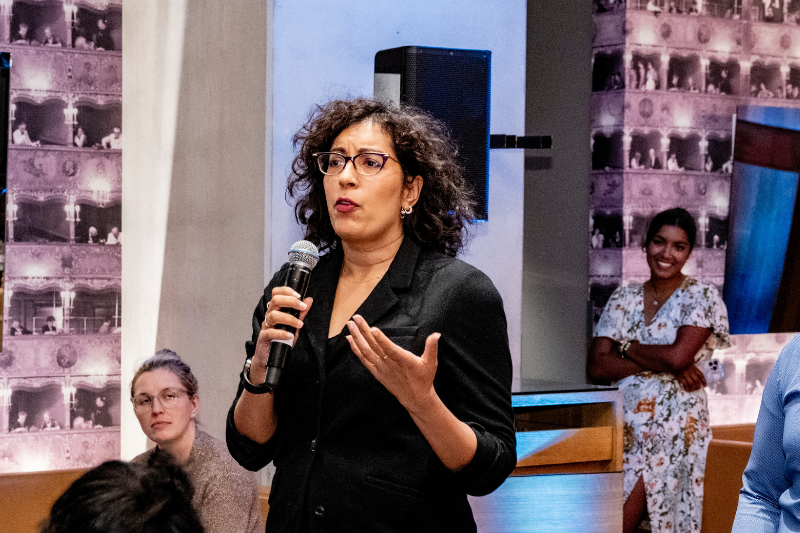
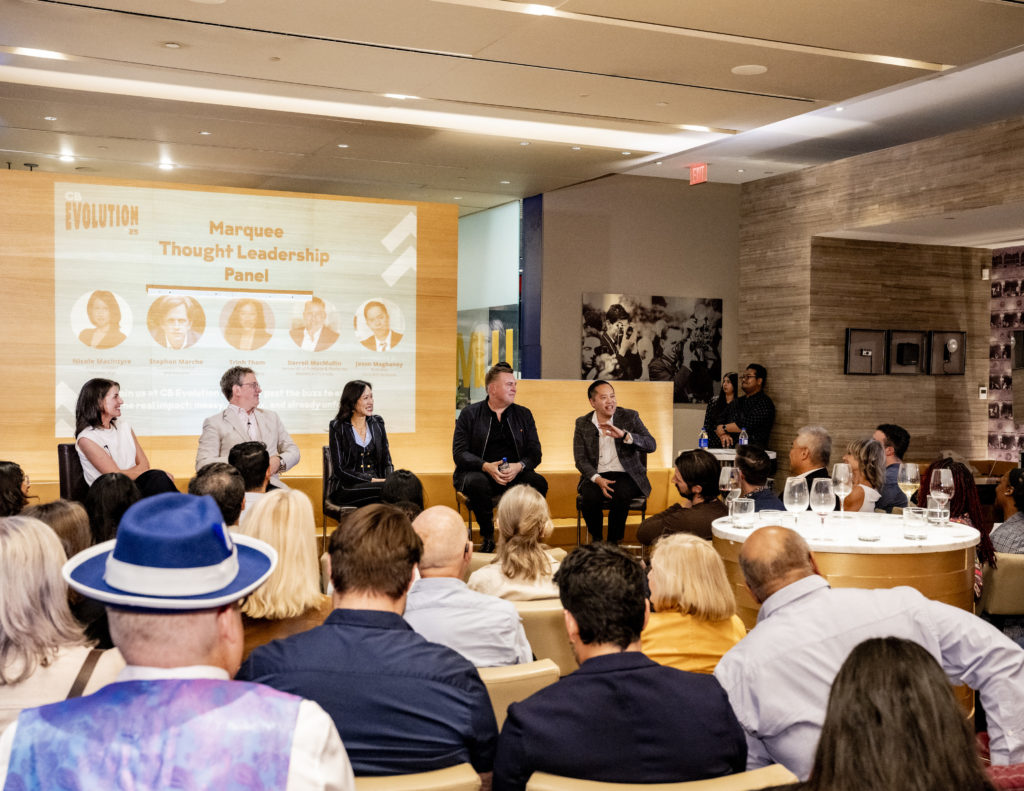
The Marquee Panel: AI’s Collision with Business and Culture
The headline panel brought together four voices from different corners of Canadian life: Stephen Marche, novelist and essayist; Nicole MacIntyre, editor-in-chief of the Toronto Star; Trinh Tham, CEO of Chatime and Bake Code; and Darrell MacMullin, senior vice president of products & platforms at Mastercard Canada.
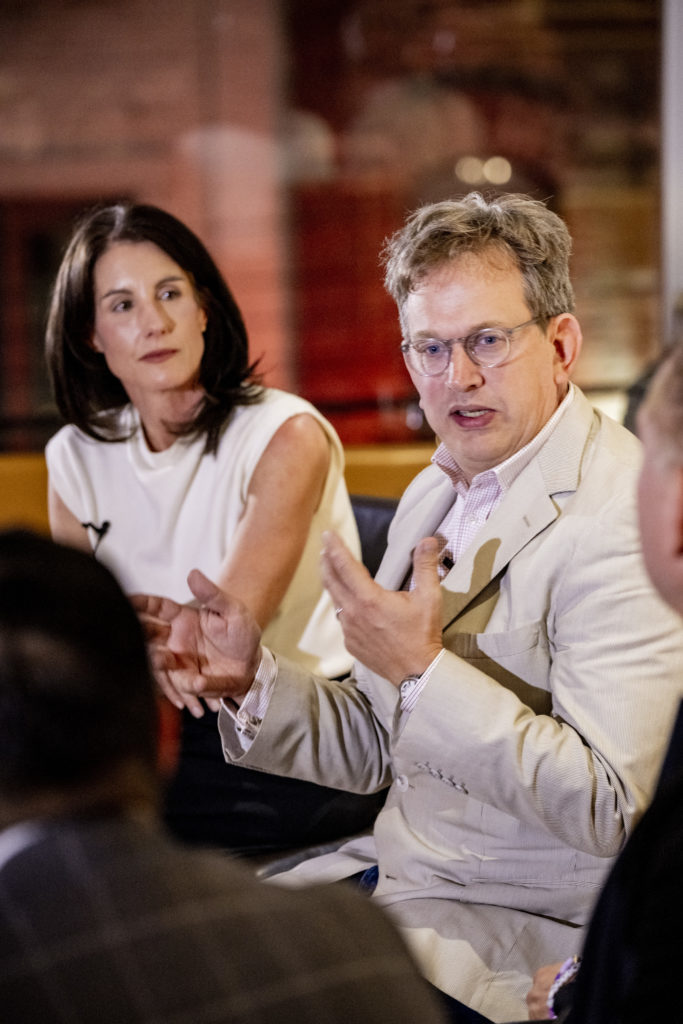
Marche framed the conversation in terms of cultural history. Too much of the current AI debate, he argued, is fixated on surface-level outputs—“funny little images” or chatbot responses—when the real frontier is how creators might collaborate with machine intelligence. “To get the creative material you need out of AI, you need to know what you’re asking it for—and that’s the problem. Most people don’t know what they want,” he said. For him, the arrival of AI echoes the arrival of photography: first dismissed as mechanical, then mired in debates over authorship, before finally being recognized as its own art form. The unresolved questions around ownership and originality in AI, Marche suggested, mark a similarly transformative moment.
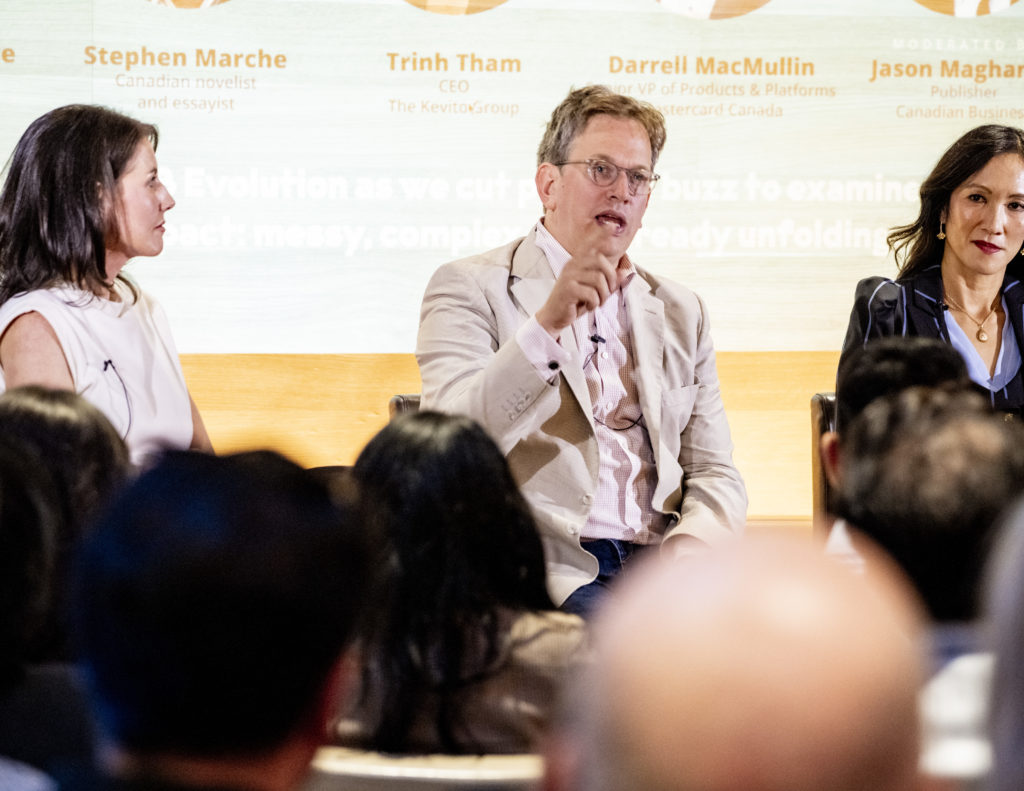
MacIntyre spoke from the vantage point of running one of Canada’s largest newsrooms. With shrinking resources, reporters are now expected to file for web, social, newsletters, and video all at once. AI, she acknowledged, could help lighten that load by handling repetitive tasks like transcription or copy editing. But the heart of journalism, she argued, cannot be automated. “AI might be able to copy edit, but I don’t know that it can have that gut instinct that comes from years in journalism—about, is this a story that feels right? Is this what our readers want?” she said.


Her deeper concern was institutional trust. In a world flooded with synthetic content, news organizations must double down on verification and editorial judgment. “If people don’t believe what they’re seeing or reading, that’s an existential threat to democracy,” she warned. For MacIntyre, the role of journalism is not diminished by AI but made more vital.
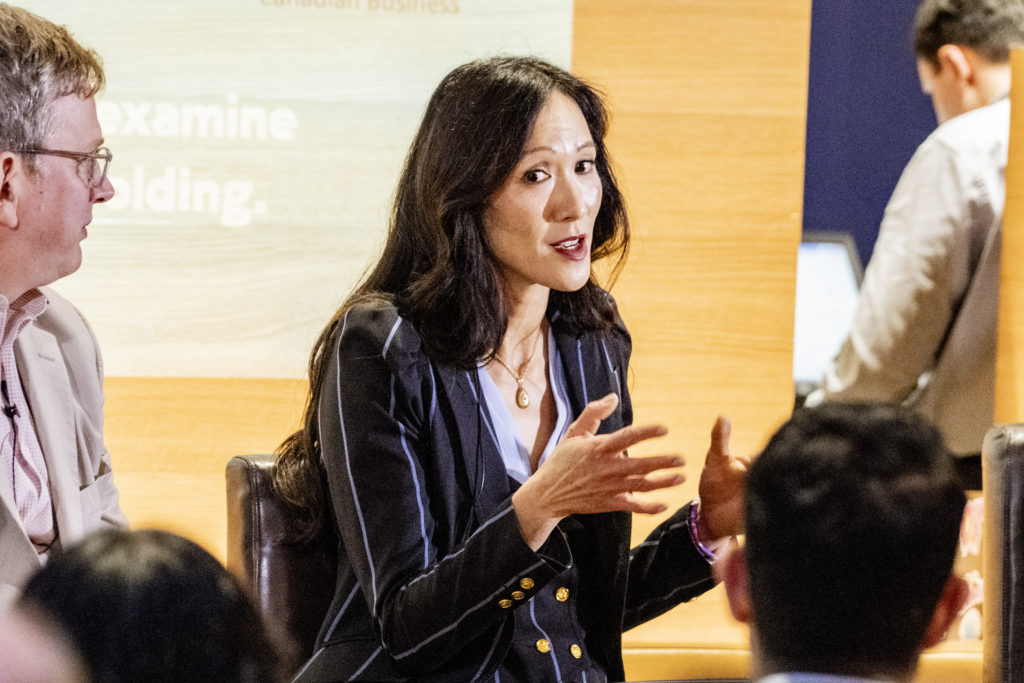
If Marche and MacIntyre represented the cultural and civic stakes, Trinh Tham offered the perspective of an operator balancing scale with experience. At Chatime and Bake Code, AI now helps forecast demand and guide supply chain decisions. She cited a recent example of using AI to identify rising demand for matcha and buying stock ahead of a price surge that has since tripled costs. But she was quick to underline that these systems are only as good as their data. “Bias in data collection propagates bias in results,” she said, noting the need for leaders to scrutinize their inputs as carefully as their outputs. And when it comes to the sensory and emotional elements of her business, Tham was unequivocal: “AI can’t taste.”

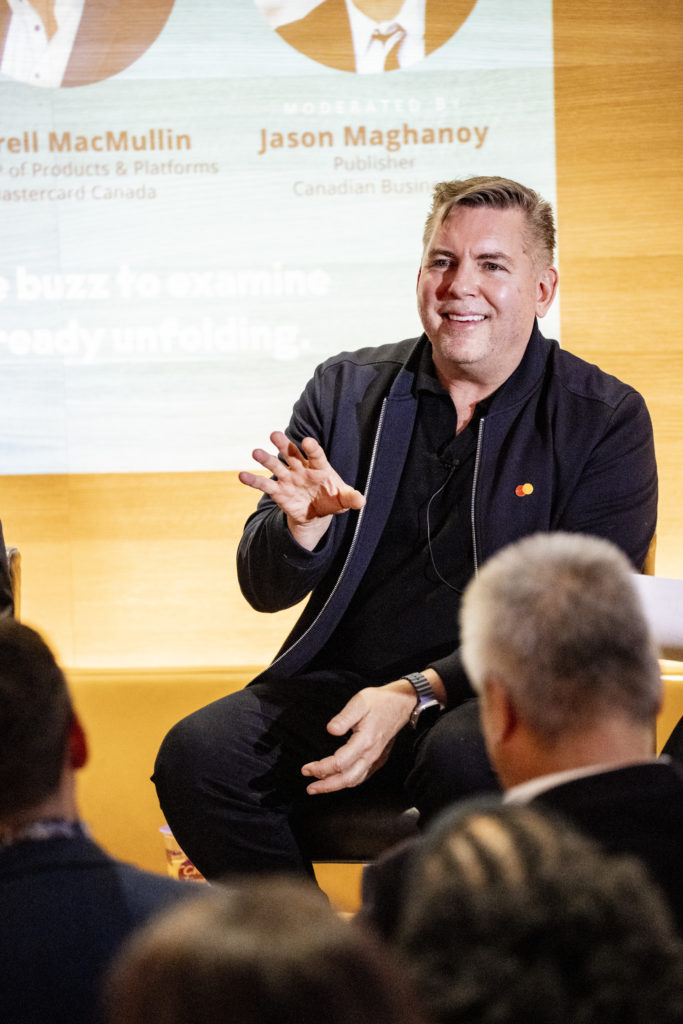
Darrell MacMullin took the conversation back to scale. Generative chatbots like GPT may dominate headlines, but Mastercard applies AI across personalization, fraud detection, and risk management. The key, he argued, is seeing AI not as an “answers machine” but as an enabler of better thinking. To illustrate, he shared how he and his teenage son built a prototype business in eight weeks using AI agents as CFO, CMO, and project manager. The experiment wasn’t about replacing human effort, but about compressing cycles of learning and execution. “Used well, AI can unlock critical thinking and entrepreneurship rather than replace them,” he said.

Taken together, the panelists painted a picture of AI as both disruptive and generative—a technology that forces uncomfortable questions about authorship, responsibility, and bias, but also unlocks new efficiencies and possibilities. What unites their perspectives is the conviction that human judgment—whether in art, journalism, retail, or global finance—remains the decisive factor.

A Night of Ideas and Exchange
Between panels, attendees spilled back into Luma’s lounge, where the buzz of conversation carried over drinks and small plates. By the evening’s end, a theme had crystallized: AI may accelerate everything, but trust, judgment, and human creativity are what give innovation meaning.




As Elofson had said at the outset, innovation without trust doesn’t scale. The discussions that followed made clear that in every sector, Canadian leaders are wrestling with how to harness AI’s promise without sacrificing the credibility and confidence that make progress possible.