

The Count On Me Culture: How Trust and Empathy Transformed a $5.5 Billion Telecom Giant

JR Shaw, the founder of Shaw Communications, built the company on deeply held family values and the belief that culture mattered as much as performance. While many executives talk about culture, few can point to it as a measurable driver of growth. Former Shaw Communications president Peter Bissonnette took that belief seriously—embedding trust, empathy, and accountability into how the business operated. Those values became strategic assets, helping transform Shaw Communications into a $5.5-billion Canadian telecom powerhouse.
In Count on Me: Leadership Lessons in Perseverance, Self-belief, and the Power of Seeing the Best in People, Ottawa-born Bissonnette makes a case rarely heard in boardrooms: that people-first leadership, when practised deliberately and consistently, can deliver real financial returns.
At a time when executives are under pressure to drive performance without burning out their workforce, his story offers a timely, experience-backed playbook for leading at scale.
How Early Adversity Shaped a Leadership Philosophy
Raised by emotionally distant parents as one of seven siblings, Peter Bissonnette recounts a childhood marked by instability and hardship. In Count on Me, he shares details of his formative experiences such as frequent moves across Canada and abroad, time at a British boarding school run by Augustinian monks, early work as a paperboy in Vancouver, and a brief pursuit of priesthood that ended in expulsion from seminary, and he touches on the encounters of physical and emotional abuse from authority figures that shaped his early life.

“Being forced to adapt quickly to a way of life I didn’t understand or agree with fostered my resilience,” he writes in Count on Me, adopting a silver-lining perspective that is a recurring theme throughout the book.
That resilience, however, did more than shape Bissonnette personally—it directly informed how he later approached leadership, decision-making and organizational culture. Rather than reproducing the rigid, hierarchical systems he experienced early in life, Bissonnette became determined to build environments rooted in trust and dignity.
“I said, if I ever have an opportunity to lead people, I want to ensure that however I’ve been treated in my life is replicated in a more positive way,” says Bissonnette. “It takes a commitment from senior leadership and from employees to say, ‘Wow, this makes sense. This is good business.’”
Operationalizing Trust Across the Organization
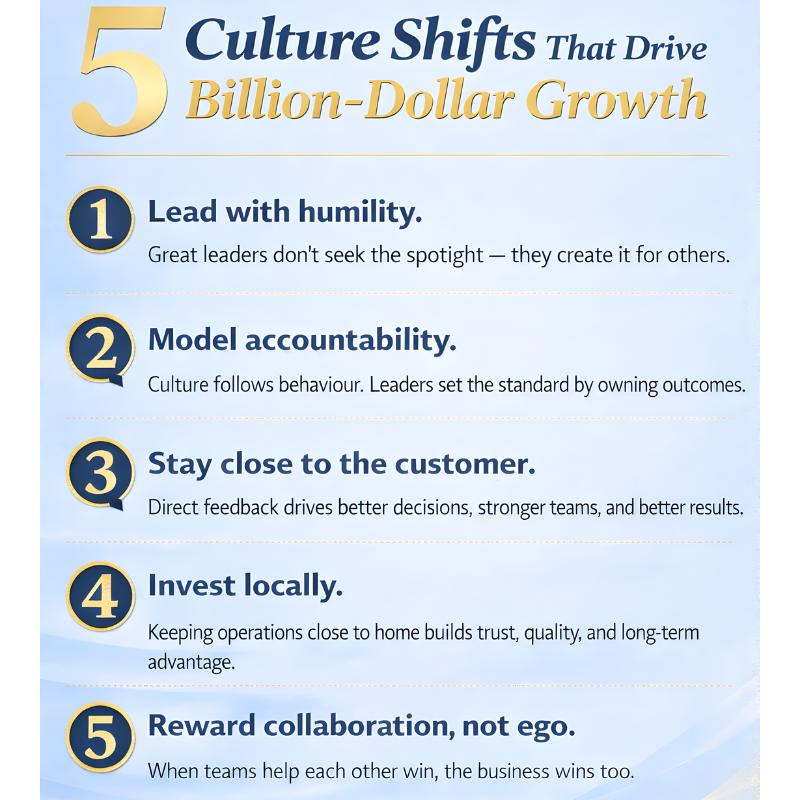
Under Bissonnette’s leadership, Shaw maintained a distinctly Canadian operational model, keeping call centres local at a time when competitors were outsourcing overseas. Although more costly in the short term, the strategy improved service quality, employee engagement and customer loyalty—advantages that compounded over time.

Instead of cloistering himself in an ivory tower (or a fancy boardroom), Bissonnette spent many of his years at Shaw travelling with company founder Jim Shaw, talking in-person with a variety of employees and using his diverse career background to better understand their jobs and foster communication.
“We’d been in the industry from the ground up, and so we could communicate with employees,” says Bissonnette. “When we met with staff, we actually understood what their working conditions were, what was important and how we could provide the kind of work environment that truly supported them.”
For Bissonnette, these decisions reflected a consistent logic: when employees feel respected and customers feel heard, performance follows.
Why Empathy Became a Competitive Advantage
Bissonnette’s relationship-building extended beyond formal management structures. An accomplished guitarist, he formed a band made up of Shaw employees—an unconventional move that reinforced his broader leadership philosophy.
“That gave me grounding in what was happening in their lives,” he explains. “I was the president, playing with salespeople and technicians.”
That proximity, he argues, created credibility and faster problem-solving. By flattening hierarchy in informal settings, Bissonnette reinforced a company-wide ethic of mutual respect and collaboration that carried into the workplace.

Looking back on his career, Bissonnette doesn’t credit Shaw’s success to a single strategy or market advantage. Instead, he points to a leadership philosophy grounded in basic humanity with direct implications for performance, retention and long-term growth.
“The Golden Rule was a powerful ambassador for us,” he says. “It was really just treating employees as you would like to be treated.”
In an era defined by talent shortages, organizational fatigue and heightened scrutiny of corporate leadership, Bissonnette’s approach challenges a lingering assumption in business: that empathy and profitability sit at odds. His career suggests the opposite—that empathy isn’t a soft skill; it’s a management strategy that offers a real competitive advantage.
Peter Bissonnette’s Count on Me: Leadership Lessons in Perseverance, Self-belief, and the Power of Seeing the Best in People is available now from Ingenium Books