
How My Venture Studio Helps Canadian Founders Build at Home
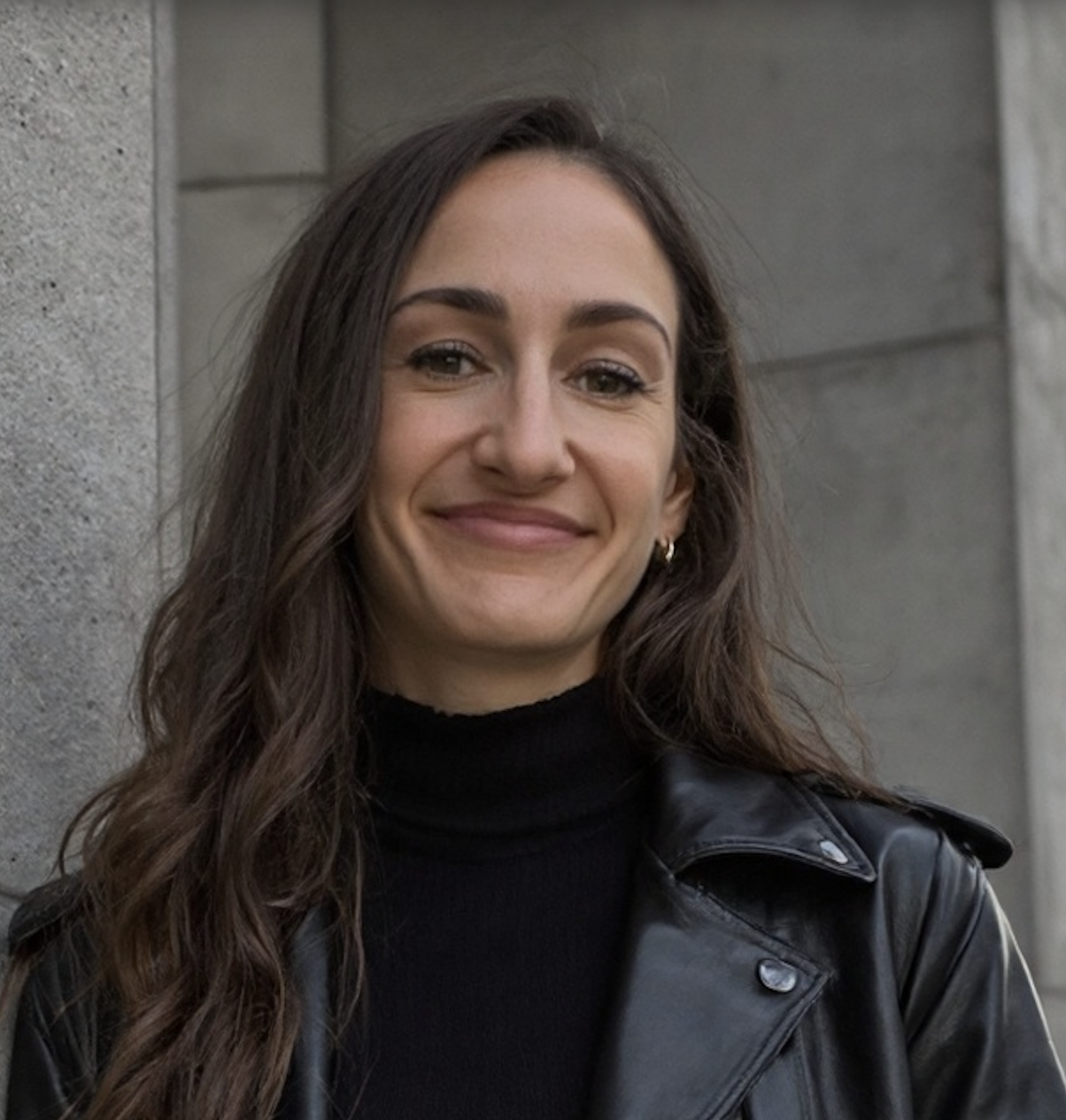
Born and raised in Vaughan, Ontario, I was a naturally curious kid—always open to trying new things. So in Grade 9, when a friend suggested we check out an after-school program called DECA since there was free pizza, I tagged along. I later realized how formative the experience was.
DECA is an international after-school program focused on business competitions that prepare students for careers in marketing, finance, and management. Participants tackle business scenarios—like a local bookstore facing competition from a new nearby Indigo opening—and after a brief preparation period, present solutions to a judge, role-playing strategies to grow the business and retain customers.
As a drama geek, I was drawn to the performance aspect, but quickly fell in love with the problem-solving—understanding an audience and how to respond. DECA became my first foray into business. I got deeply involved in my high school and then provincially as an Ontario executive—travelling across North America, competing beyond Toronto, and meeting other curious, ambitious students. Those experiments planted the seeds for Simple Ventures, the venture builder and early-stage fund I later launched to support Canadian founders.
When I went to Queen’s University to study commerce, I joined similar competitions, like Top Ad Exec (now Canadian Marketing League) where I met Bram Warshafsky. We started competing together and quickly learned we made a strong team. After graduating in 2010, we spent about three years in brand management for consumer packaged goods, mainly for Johnson & Johnson. On the side, I travelled and stayed in hacker houses in Silicon Valley, while Bram and I brainstormed our own business ideas.
As brand managers, Bram and I were often responsible for producing and editing marketing content. Back in the day, brands typically ran one big campaign—a TV ad, maybe a radio spot or a billboard—and that was it. But with the rise of social media, they suddenly needed thousands of digital assets.
One day, we were tasked with cutting a 60-second video down to a 15-second pre-roll ad for YouTube. An agency quoted $50,000 and a two-month turnaround. My 15-year-old brother looked at it and said, “Rachel, I can do that in iMovie in an hour.”
That moment—when we realized how many everyday tasks were inflated by the right tools but the wrong jobs—eventually led us to leave our corporate jobs and launch 5Crowd in 2014, a digital platform connecting companies with vetted freelance talent. Our work there took us around the world, stepping into freelancers’ lives to see their work firsthand. We met stay-at-home parents in rural towns, after their kids were asleep—completing radio ads, social campaigns, pre-roll videos, copywriting, translations— opportunities they’d never had before.
We eventually sold the company to SGSCO—now Propelis, owned by ONEX Private Equity—in 2016, joining a larger customer base. That experience launched an international journey in entrepreneurial ecosystems. I travelled across Southeast Asia, attending demo days in Kuala Lumpur and Manila, and learning how other markets build companies. Yet over time, I felt increasingly drawn to solving problems at home.
Canada’s productivity levels—our output per hour worked—lags well behind the OECD average and trails the United States, growing less than one percent annually from 2000 to 2023. A recent Toronto’s Leaders Fund study found that only about a third of Canadian-led “high-potential” startups launched in 2024 remained headquartered in Canada, down from over 67 per cent between 2015 and 2019, with many relocating to the U.S. or the European Union.
The idea for Simple Ventures came after I met Michael Katchen, co-founder and CEO of Wealthsimple, following my work as a partner at Entrepreneurs First in North America—a global venture builder backed by major tech founders like Reid Hoffman, co-founder of LinkedIn, and the Collison brothers, co-founders of Stripe. What was supposed to be a 30-minute coffee with Mike in 2022 stretched far longer as we realized we shared the same vision for Canadian entrepreneurship: enabling exceptional entrepreneurs to stay in or return to Canada.
That belief became the foundation of our venture studio. We launched in March 2024 with a $19-million fund. We’re lucky to have investors who believe in our mission, including corporate strategics like TD Innovation Partners, Sun Life and Sobey’s, as well as founder-operators such as Joanna Griffiths, Mike Murchison, and Kirk Simpson, founders of Knix, Ada, and Wave, respectively. We do things a bit differently than a traditional fund. Instead of only investing in external companies, we co-create them with founders—incubating promising ideas, validating them, and leveraging our investor network to bring each company to life from the ground up.
Travelling abroad and seeing other start-up ecosystems up close made it clear that Canada has the ingredients to be a world-leading innovation economy. As a top-10 global economy, we have the capital to foster innovation and access world-class talent—AI hubs like Mila in Montreal, Amii in Alberta, and the Vector Institute, to top talent clusters in Ontario. Yet too often, we say Canada excels at only two things: extracting resources and financing that activity. If that’s the story we pass to our kids and grandkids, we’re in serious trouble. This isn’t just a tech problem—it’s a Canadian prosperity problem.
One of our biggest challenges is retaining top founder and CEO talent in Canada. Many potential founders ask the same question: “Do I stay home or go abroad to build my company?” We aim to answer that by showing why we’re building here—and why others should too. Canada has a strong market and talent, yet many sectors are dominated by a few players, leaving plenty room for growth.
We also highlight the social impact of building in Canada: by creating companies, founders can generate jobs, revenue, and better services, benefiting communities and strengthening the economy. Together, these forces create a strong flywheel for founders, CEOs, and investors. We’re already seeing a reverse brain drain– Canadians returning to start companies. One of our CEOs, Ashley Boyce, recently came back from New York to lead Zero Collective, a luxury handbag rental service.
Related: Wealthsimple Co-Founder and CEO Michael Katchen on Simplifying Finance Services
In just 18 months, we’ve launched and funded four businesses across Canada, creating over 100 jobs, from engineering and sales roles to care roles through portfolio companies like Alma Care, which hires postnatal specialists like night nurses, doulas, and lactation consultants. We’ve also backed companies like Harvest, which supports small-business cash flow through accounts receivable collection. Our goal is to launch 25 ventures by 2030.
When people hear about Simple Ventures, they often ask, “How can I help–and how can I get involved?” The answer is: reach out. A bit of healthy naivety is essential to be bold enough to build a business. At first, it feels like, “We can do it.” Then comes a moment of doubt: ”What did we sign up for?” But once you’re in, there’s no turning back. The only path is to push through –and having help goes a long way.
We’re always looking for remarkable leaders to join our companies and investors who share our mission. Our goal is to make a big impact—and we’re just getting started.
— As told to Xavi Richer Vis