
The 2026 CB Innovation Awards

In the last year, uncertainty has become a certainty for Canadian companies. Trade tensions with the U.S. and disruptions to global supply chains have affected manufacturers, exporters, and retailers alike, while the rapid rise of AI has pushed businesses to rethink how they operate and engage customers. As these pressures reshape the economy, forward-looking companies are forging ahead with bold initiatives to thrive in an unpredictable environment.
The fifth annual CB Innovation Awards, presented by Canadian Business in partnership with Maclean’s, celebrates organizations that have found new ways to solve problems and advance their industries. The awards recognize businesses tackling pressing social, economic, and environmental challenges across five key sectors—social impact, financial services, sustainability, technology, and arts and media—by turning creative solutions into real-world impact.
Winners include both ambitious startups and established firms innovating from within. One company, for example, is expanding access to credit for historically underserved communities, while a quantum computing startup is accelerating pharmaceutical development and the adoption of electric vehicles. Together, these efforts show that smart innovation can benefit both people and business.
In a year marked by obstacles for Canadian businesses, these stories point to a different narrative. Companies are adapting, innovating, and setting the course for what comes next—building stronger businesses and communities in the process.
Winner: Social Impact, Health & Education
Flashfood
Transforming grocery surplus from landfill waste into family savings
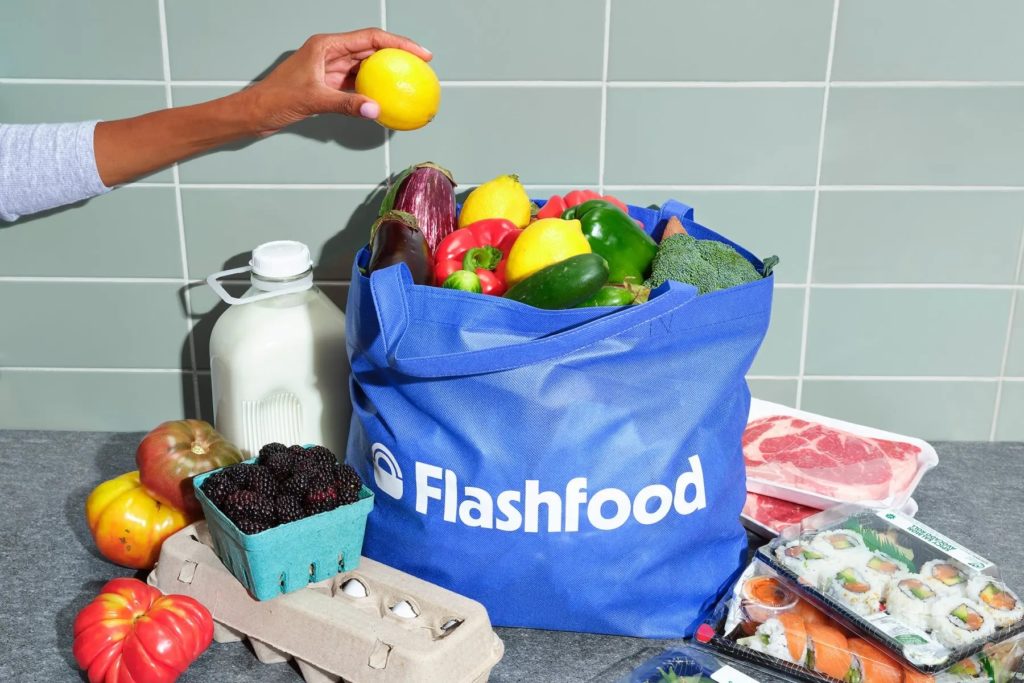
Every year, millions of pounds worth of perfectly edible food end up in landfills around the country. Much of it is meat and produce that are completely safe to eat but went unsold prior to their official best-before dates. That avoidable waste is worth some $58 billion annually, and it generates more than 25 million metric tonnes of CO2 emissions a year—equivalent to 253,000 flights from Toronto to Vancouver. Enter Flashfood.
Founded in 2016 by Josh Domingues, a former investment adviser and management consultant, Flashfood offers a simple solution to the problem: a digital marketplace that connects shoppers with steeply discounted groceries that are nearing their best-before dates. Today, the platform links 1.5 million shoppers to fresh food through 2,000 retailers across North America, including Loblaws in Canada and Kroger in the U.S.
Since its launch, the company has diverted more than 150 million pounds of food from the landfill—including more than 20 million pounds in Canada in the last year alone—and helped shoppers save $60 million on groceries. Nearly one-third of that volume consisted of fresh fruits and vegetables, driven by Flashfood’s popular produce boxes, with 1.5 million sold in 2025 in North America. The company earns revenue through a percentage of each transaction plus a modest per-order service fee.
Flashfood CEO Jordan Schenck, who took over last year as CEO, says much of the company’s success stems from shoppers’ growing awareness of their environmental footprints. Rising grocery prices and a higher cost of living are also a pressing concern. “Why wouldn’t you buy a perfectly ripe pineapple or mango for a fraction of the price?” says Schenck.
Flashfood also helps grocery partners make better use of surplus food. The platform shows retailers which items are near their expiry and how they are selling, so stores can set the right discounts to sell more and waste less. Using data analysis, the app can identify optimal discount levels, sometimes showing that a product sells more effectively at 10 per cent off than 20.
Looking ahead, Flashfood plans major expansions across Canada and the U.S., including a division-wide rollout of over 100 Kroger stores, while continuing to grow in markets where it’s already available.
Winner: Technology
Xanadu
Pioneering quantum technology for the masses

Imagine a maze. A conventional computer tests each possible path, one by one, until it finally finds the exit. A quantum computer uses qubits—units of information that can exist in multiple states at once. These can explore many possibilities simultaneously and solve complex problems far faster: calculations that would take today’s supercomputers thousands of years might be done in hours. Quantum computing could transform AI, health care, transportation and more.
Born in Australia, founder Christian Weedbrook pursued a Ph.D. in quantum computing at the University of Queensland, followed by postdoctoral work at MIT and the University of Toronto. Canada’s major government investments in quantum research were a huge draw for him. The National Research Council projects its quantum sector could reach $139 billion by 2045, supporting 200,000 jobs, while the global market could hit US$1.3 trillion by 2035.
Weedbrook is particularly excited about quantum computing’s potential for drug discovery. Right now, testing can take 10 to 15 years and billions of dollars, while 90 per cent of early candidates fail. Quantum systems could accelerate this process, improving success rates and enabling faster responses to future pandemics.
Xanadu is developing the hardware and software to make this possible. In January of 2025, it unveiled Aurora, the world’s first networked photonic quantum computer. Built from four racks linked by 13 kilometres of fibre optics, it serves as a platform for scalable quantum systems and the engineering behind them. Xanadu recently listed on the Nasdaq and the TSX to raise capital and advance its transformative technology.
Winner: Financial Services
Neo Financial
Making credit more accessible and transparent

Longtime friends Jeff Adamson, Andrew Chau and Chris Simair teamed up in 2013 to launch the food-delivery platform SkipTheDishes. Years later, in 2019, they were looking for their new challenge. They didn’t come from the financial world, but they noticed common frustrations among their friends and families: working hard yet feeling financially squeezed, struggling to access credit, or navigating Canada’s antiquated banking system, dominated by the Big Five. When a single institution controls chequing accounts, savings, credit cards and mortgages, it faces little pressure to compete. The result: low savings returns, high credit card rates and mortgage renewals that feel like take-it-or-leave-it offers.
The Big Five’s apps often come with only the most basic features, with little incentive to innovate. “A banking app should feel like Spotify or Uber,” says Adamson. “It shouldn’t feel like you’re still operating in the dial-up era.” This idea became the foundation for Neo Financial, which offers many of the same services as traditional banks. The difference, Adamson says, is that each service is designed to stand on its own. If the savings rate isn’t competitive, customers can move their money elsewhere; if the credit card doesn’t offer real value, they can switch to another company.
The trio teamed up with CTO Kris Read and launched in September of 2020. Their goal was to save customers time and money while setting a new standard for Canadian banking. Instead of maintaining a costly physical branch network, Neo operates entirely digitally. Its app is easy to use, with self-serve controls that allow customers to manage limits and track spending instantly.
This focus on speed and user customization has turned Neo into one of Canada’s fastest-growing tech companies, with more than $650 million in investments. It now works with 10,000 merchant partners nationwide and serves more than one million Canadians, with its cardholders collectively increasing their credit scores by 6.3 million points in 2025. In the same year, the company says it helped customers save $110 million in fees, based on its calculation of what users would have paid in monthly chequing and NSF fees at a Big Five bank.
Neo uses AI to analyze real-time data to assess customers’ financial behaviour and expand access to credit. This opens doors for self-employed contractors, gig workers and newcomers whose earning power may not yet be reflected in the credit histories that conventional lending models use. The company has also introduced a model that partners with multiple banks to secure better deposit rates from major global institutions and passes higher yields directly to customers. “It’s the Costco effect for deposits,” says Adamson.
Winner: Arts, Media & Marketing
Crave
Bringing original Canadian content—and hockey romance—to millions of homes across the country

Crave has become a fixture in Canadian living rooms, carving out space in a crowded streaming market by focusing on homegrown content. In 2014, Justin Stockman, vice-president of content development and programming at Bell Media, Crave’s parent company, noticed that none of the major streamers were investing in Canadian TV and movies. “We knew Canadians love seeing themselves on screen. That became our edge.”
Instead of joining a costly content arms race, Crave focused on steady growth through programming that didn’t overextend the business. It partnered with HBO to bring in award-winning shows like The Last of Us and The White Lotus, while a catalogue of comfort sitcoms such as Friends, The Office and Brooklyn Nine-Nine keep viewers entertained.
But Crave’s Canadian content is its standout feature. When the second season of Letterkenny, a deadpan comedy set in a fictional rural Ontario community, premiered on Christmas Day in 2016, subscriptions spiked so sharply that the team initially suspected a tracking glitch.
During the 2025 holiday season, six of the top 10 titles on Crave were Canadian originals, including Canada’s Drag Race, Project Runway Canada and Shoresy, alongside breakout hit Heated Rivalry, a romantic drama about the secret relationship between two star hockey players. The series attracted the largest audience for a Crave original debut ever and drove more new subscriptions than any other title in 2025.
Crave has further broadened its reach through subscription bundles with Disney+ and TSN, along with the addition of live programming from CTV and Noovo. By the end of 2025, total subscriptions grew 26 per cent year-over-year to roughly 4.6 million. Building on that momentum, Stockman believes Crave will continue competing with global streaming giants. “We can stand beside Netflix and Disney with just as strong—and in some cases, stronger—offerings,” he says.
Winner: Sustainability
Better Battery Co.
Rethinking everyday batteries with innovative packaging and a circular recycling system

In Barrie, Ontario, sisters Jaclyn Byles and Jessica Jenkins kept running into a common household dilemma: what to do with dead batteries. With five children between them, they were constantly replacing AA and AAA batteries in remote controls, toys, wireless keyboards and other everyday gadgets. “Like so many people, we ended up with an overflowing shoebox full of used batteries that we kept meaning to take to a recycling centre,” says Byles.
All too often, that trip never happens, and the batteries end up in the trash. The scale of the problem is staggering: in North America alone, roughly three billion batteries are thrown away each year instead of recycled. Globally, an estimated 30,000 tonnes are discarded annually, with only a fraction properly processed. The environmental toll is severe—corroding batteries can leak chemicals into soil and water, contaminating ecosystems, while their disposal releases greenhouse gases and generates waste, compounding the damage.
To combat this problem, in 2021, the sisters launched Better Battery Co., a practical alternative for sustainability-minded consumers. Its alkaline batteries offer the same high performance as common brands, with a shelf life of up to 10 years, within the typical range.
But the key innovation from Byles and Jenkins lies in their packaging and the way used batteries are recycled. Unlike traditional batteries sold in disposable blister packs, Better Battery Co. packages its products in recyclable storage boxes that hold up to 40 of its AA or AAA batteries in individual slots. Fresh batteries face one way and, once they’re depleted, users return them to the box flipped over, making it easy to see which ones are spent. This simple system ensures only used batteries are replaced, preventing unnecessary replacements and wasted charge. When the box is full, customers print a prepaid shipping label from Better Battery Co.’s website and send the kit, including batteries and packaging, to the company’s private recycling partners, where everything is recycled or upcycled.
Breaking into a category long dominated by brands like Energizer and Duracell was no small feat. But Better Battery Co.’s straightforward, intuitive packaging resonated with retailers facing growing demand from environmentally conscious consumers. In 2023, the company launched in the U.S. market, securing supermarket chain Wegmans as its first major retail partner. It also sells directly through its website and to wholesale customers in hospitality, manufacturing and other battery-intensive industries. In January, the company made its debut in Canadian retail at select Home Hardware locations.
Ones to Watch: Social Impact, Health & Education
Fitzrovia
Reshaping Canada’s housing market with purpose-built rentals
For decades, condo development has propped up Canada’s housing supply. Recently, however, the nationwide condo market slowdown has exposed the limits of that model. Fitzrovia is betting big on rentals instead. Founded by real estate veteran Adrian Rocca, the company is Canada’s largest developer of purpose-built rental housing, with nearly 13,000 units completed, acquired or under development across the Greater Toronto Area, Montreal and Vancouver.
Fitzrovia isn’t just building apartments. The company is involved in everything from land acquisition and design to construction, leasing and property management. Its rental communities also integrate daycare, on-demand virtual care and wellness amenities such as gyms and saunas—an approach aimed at improving social outcomes amid Canada’s housing crisis.
In 2024, the company launched a $1.1-billion, pension-backed fund, starting with the redevelopment of a 14-storey office building in midtown Toronto into a 49-storey rental tower. Fitzrovia is also developing student-focused housing near Ontario universities including Toronto Metropolitan University, Queen’s and Western.
Meridian Credit Union
Blending co-operative banking with AI-driven financial guidance
As Ontario’s largest credit union, Meridian serves more than 370,000 members seeking an alternative to the Big Five banks. As a co-operative, it is owned by its members rather than public shareholders, allowing profits to be reinvested into better rates and lower fees instead of paying them out as dividends.
It also offers personalized financial advice and support to help members plan more effectively for the future.
In October of 2025, Meridian expanded that commitment with the launch of OnYourWay, a digital platform within its online and mobile banking services designed to give its members greater clarity and control over their personal finances. It pairs free financial planning with human advisory support, offering real-time insights into cash-flow fluctuations, as well as subscription reminders and alerts for potential duplicate payments.
Ones to Watch: Technology
Borderless AI
Automating global HR compliance instead of outsourcing
Borderless AI is modernizing global HR by using generative AI to streamline the complex work of hiring, onboarding and paying international employees. As companies increasingly build teams across borders, friction often comes from local employment law, tax rules and contract requirements. Its flagship tool, HRGPT, acts as an employment-law AI assistant, generating compliant agreements, analyzing existing contracts and answering complex HR, finance and tax questions across more than 170 countries. Available in 80 languages, HRGPT helps HR and legal teams move faster and reduce costs, delivering outputs in minutes, compared with a market norm that can take a week or more.
Microsoft Canada
Pledging $19 billion over four years to build Canada’s AI infrastructure
In December 2025, Microsoft Canada committed $7.5 billion over 2026 and 2027 to expand the country’s domestic AI capacity. This brings its total AI investment between 2023 and 2027 to $19 billion. The funding will go toward expanding Microsoft’s Canadian data centres, supporting AI research and development, and helping businesses, governments and universities adopt advanced tools. It will also strengthen training programs aimed at preparing Canadian workers with the skills needed for an increasingly AI-driven economy.
Alongside these investments, Microsoft launched an Ottawa-based Threat Intelligence Hub to help protect Canada’s digital sovereignty—the ability to control and secure its own online infrastructure and data—by detecting and countering cyber threats from hostile states and other malicious actors.
These efforts build on Microsoft’s longstanding presence in Canada, where it has operated since 1985. Today, the company employs more than 5,300 people across 11 cities and supports an ecosystem of 17,000 partner companies and 426,000 jobs nationwide. Beyond business, Microsoft contributed $219 million in grants, employee giving and tech services to Canadian non-profits in 2024 alone.
Square
Giving businesses a unified platform to sell, manage and grow
Frustrated at having to turn away a sale because he couldn’t accept American Express, glassblower Jim McKelvey teamed up with Twitter co-founder Jack Dorsey to combine merchant services and mobile payments into a single, easy-to-use service. In 2009, they launched Square with a mobile card reader that allowed anyone with a smartphone to accept payments.
Ones to Watch: Financial Services
Merchant Growth
Using the power of technology to level the playing field between small businesses and big corporations
When David Gens was working in private equity in 2009, he noticed two trends converging: the rise of online lending in the U.S. and the persistent difficulty Canadian small businesses faced securing timely financing from traditional banks. Many entrepreneurs faced rigid approval processes, with financiers often failing to recognize the true potential of their businesses.
Gens launched Merchant Growth to provide small-business owners with a faster, flexible alternative tailored to their needs. The fintech offers financing across sectors including retail, construction and hospitality and professional services. Using their own technology and data-driven risk assessment, businesses can apply in minutes and receive approved funds in as little as 24 hours. Since its founding, Merchant Growth has deployed $1 billion in financing, supporting more than 15,000 businesses and individuals across North America.
Burgundy Asset Management
Entering a new chapter under BMO after 36 years spent helping clients grow and protect their wealth
Founded in 1990, Burgundy Asset Management emphasizes business fundamentals over market swings, focusing on high-quality companies trading below their true value. That approach has helped Burgundy identify undervalued companies and deliver reliable returns across decades for its clients, who range from individuals and family offices to foundations and pension funds.
Beyond performance, the firm invests in financial literacy and inclusion. Since its launch in 2014, its Women of Burgundy program has supported more than 1,500 participants nationwide through education, community-building and the Minerva Summit—an annual event covering topics from philanthropy to Canada’s coming $1-trillion intergenerational wealth transfer.
Last November, BMO acquired Burgundy for roughly $625 million. The firm continues within BMO Wealth Management, with co-founders Tony Arrell and Richard Rooney maintaining its long-term, client-first approach.
Ones to Watch: Arts, Media & Marketing
DoorDash
Connecting local restaurants and sports fans—all while delivering your dinner
After delivering its first takeout order in the U.S. in 2013, DoorDash launched in Canada in 2015 and has since grown rapidly. In 2025 alone, the company generated nearly US$75 billion in sales for merchants across more than 40 countries and delivered more than US$20 billion in earnings to its drivers, known as Dashers.
DoorDash positions itself as a partner to local economies rather than simply a logistics intermediary. In Canada, this commitment is increasingly visible through the company’s support of women’s sports. Last October, DoorDash Canada became the official on-demand delivery partner of the Professional Women’s Hockey League, which has drawn more than one million attendees since its inaugural season in 2024. The company has also backed the WNBA and the Northern Super League under Bring It In, a national campaign that connects independent restaurants and fans by encouraging game-day broadcasts and promotions across the country. By tying its platform to historically overlooked sporting events, DoorDash aims to accomplish two things: create new opportunities for local restaurants to attract customers and support greater gender equality in sports and entertainment.
The GIST Media
Putting women fans at the centre of sports coverage
Co-founded by Ellen Hyslop, Jacie deHoop and Roslyn McLarty in 2017, The Gist launched at a time when women’s sports received less than four per cent of overall coverage and female fans were largely overlooked in an overwhelmingly male-dominated sports media landscape. Seeing this gap, the trio built a multi-platform sports media company designed specifically for women.
Today, The Gist splits its coverage between men’s and women’s sports and has grown into a community of over one million newsletter subscribers, with more than 400,000 Instagram and 230,000 TikTok followers. Its twice-weekly flagship podcast, The Gist of It, discussing current sports topics, further extends that reach. Backed by brand partners such as Nike, State Farm and FanDuel, the company has reported annual revenue growth of 80 to 100 per cent since 2020.
Ones to Watch: Sustainability
Haven Greens
Applying advanced agri-tech to grow Canada’s leafy greens locally
Canada may have vast swathes of farmland, yet roughly 90 per cent of its leafy greens are imported—mostly from California—
leaving grocery shelves vulnerable to the ongoing trade disruptions from
U.S. tariffs. Haven Greens is working to change that.
Founded by third-generation Ontario farmer Jay Willmot, the company opened a five-acre greenhouse just north of Toronto in 2025, making it the country’s first fully automated facility of its kind. The climate-controlled, pesticide-free operation is designed to produce up to 10,000 pounds of lettuce daily, grown year-round and harvested fresh. Haven Greens products are now stocked at major national retailers including Metro, Sobeys and Costco, offering a glimpse of a more resilient, domestically grown food supply.
Saint-Gobain Canada
Providing sustainable solutions to Canada’s housing crisis
Canada is grappling with an acute housing shortage, and Saint-Gobain Canada is stepping up to help meet the demand. The French-founded company supplies light and sustainable construction materials to contractors and developers for everything from residential homes to infrastructure like bridges and wind turbines. Worldwide, Saint-Gobain generates $74 billion in annual sales and employs 162,000 people across 80 countries.