
Local Meet-up Hubs and Reconfigured Spaces: The Reality of Getting Back to the Office
At around the one-year mark of the pandemic, most companies had hashed out a rough back-to-office plan. Industry leaders tried to influence trends—or at least make headlines—with bold decisions, like Shopify, which publicly declared “office centricity is over.” Others, like Apple, informed employees they’d be expected in the office a minimum of three days per week come fall. Then came the Delta variant and breakthrough COVID. Studies reported a fifth of Canadian workers said they’d quit if they were forced back to an office full time. We sat down with Megumi Mizuno, chief of staff at Vancouver-based Traction on Demand—Salesforce’s largest North American consulting partner—and Paul Burns, managing director for Twitter Canada in Toronto, to find out how they’re trying to bring people together again safely.

MEGUMI MIZUNO: Traction on Demand has just under 1,100 people and pre-pandemic the majority were working in offices. Right now our spaces in Burnaby, Nelson, Montreal, and Toronto are back open, but there is no mandate to return. We’ll be keeping our offices across the country, but we’ll look to sublease the excess space we have now, like one of our two floors in our Burnaby head office.
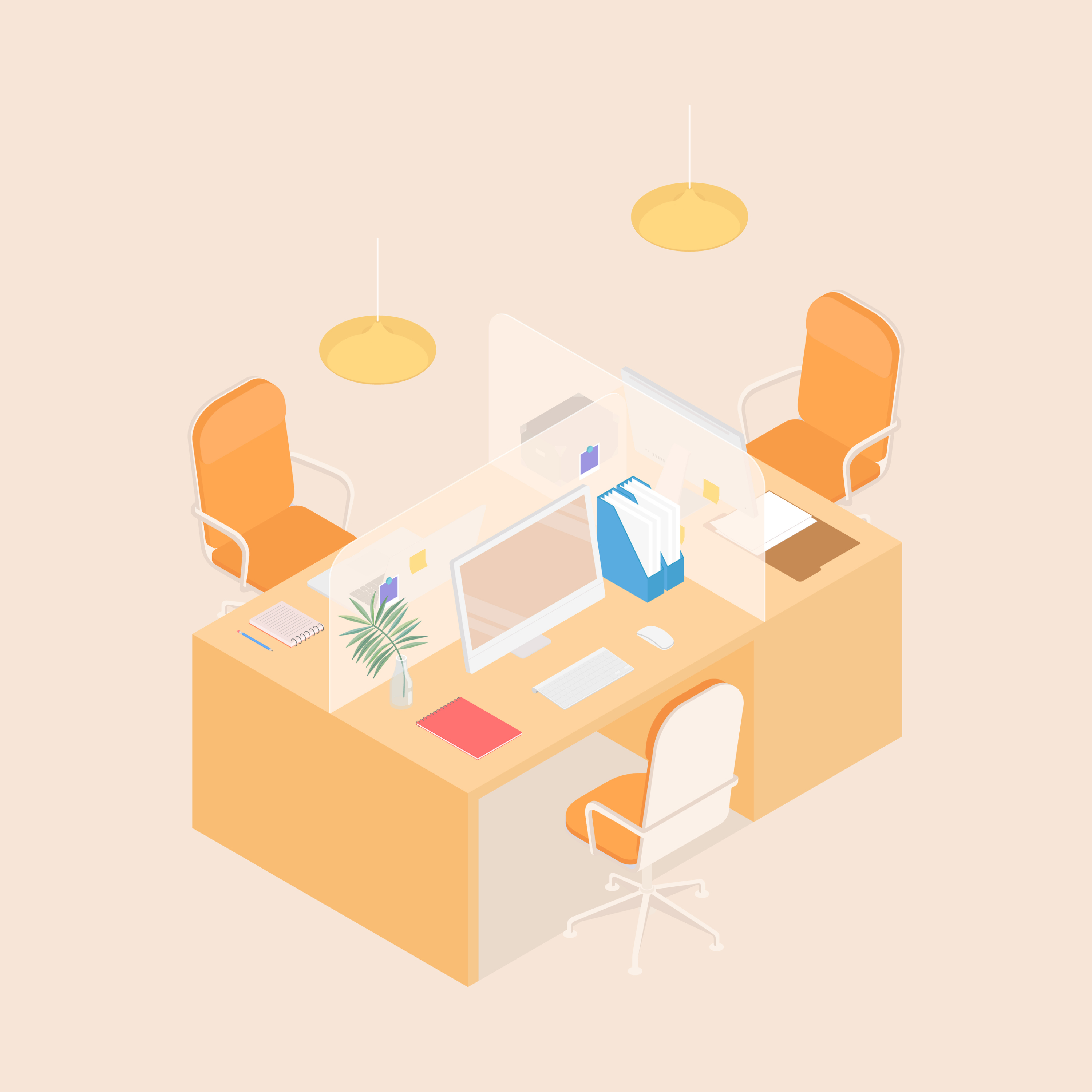
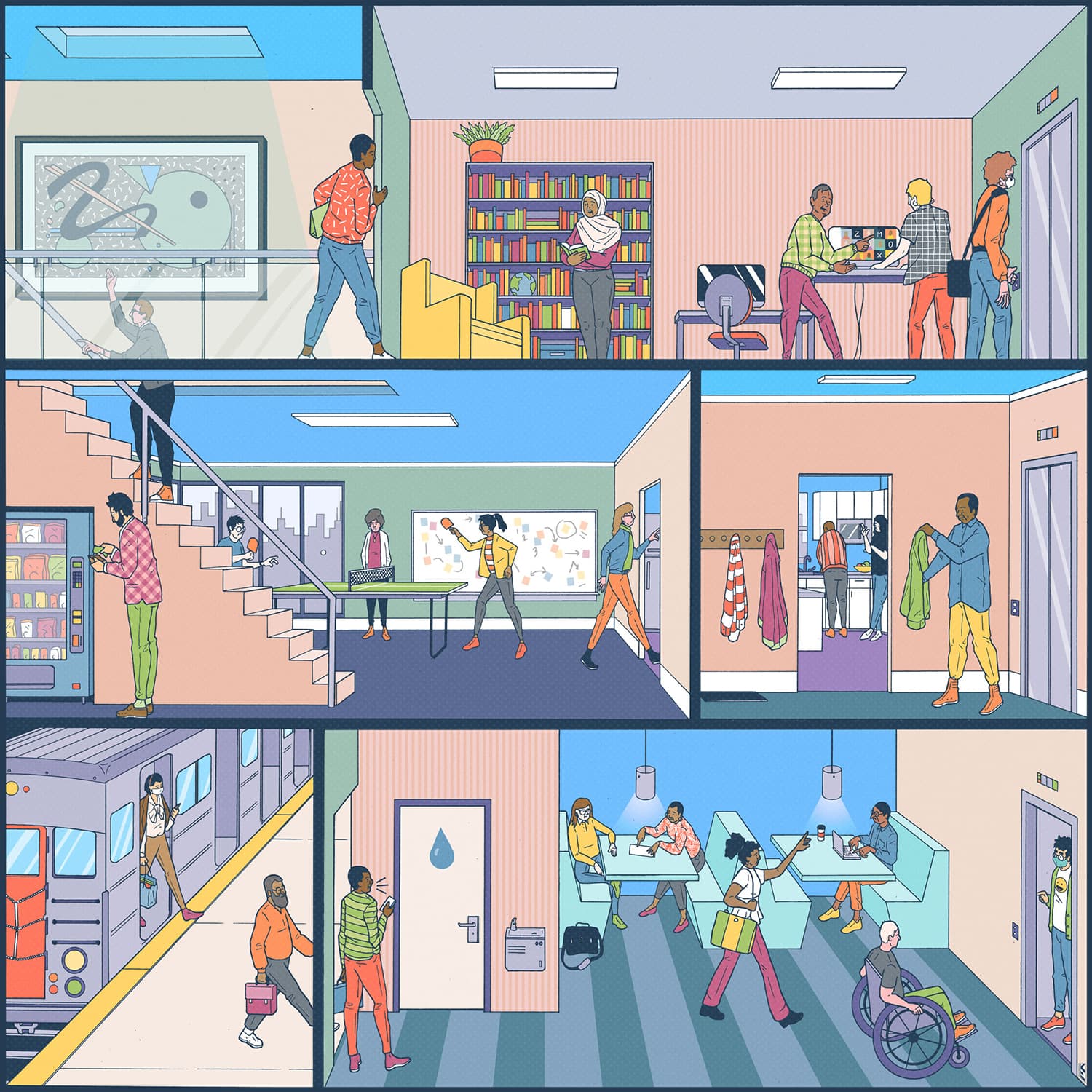
PAUL BURNS: The Twitter Canada head office is in Toronto, and we have offices all over the globe with about 6,000 employees. We were mostly working in-office, with some exceptions. We don’t have a set date for when our Toronto office will reopen. Right now we’re piloting ways to reconfigure our spaces to better support hybrid work and curating areas for collaborating, quiet focus and socializing.
M.M.: Our team has really enjoyed working from home; not having to travel into the office, they just found they were less stressed. Childcare issues were a little bit more flexible. But they also missed the interaction with other “Tractionites.” So our CEO, Greg Malpass, had an idea: There are all these local restaurants that are sitting empty during the day. Could we use them as meet-up hubs for our employees? So that’s what we’re looking to do now: partnering with local businesses to create remote workspaces so staff can connect without a long commute. The plan is to start with three spaces, and we’d like to set up a minimum-spend type of agreement. We know that many of these small businesses have suffered through the pandemic.
“Our team has really enjoyed working from home—they just found they were less stressed”
P.B.: For now, we’re letting team members make the choice that’s right for them. But given we’re a tech platform, our corporate security teams would likely have something to say about third-party spaces.
M.M.: Ours does, too, but we’re going to collaborate with them to figure it out. Working out these plans is like a pendulum: You swing one way too far, and then you swing the other way too far, and at some point, you’ll fall in the middle. And that middle is going to shift. So we’re constantly talking to people and giving as many options as possible because no one solution is going to be a fit for everyone.

P.B.: We’ve been using email, Slack channels and intranet sites to keep our staff abreast of the latest plans, and the reactions have been mixed. Some people are fired up to get back and others have said, “I’m not ever going back in.” I’m trying to be very honest with them and help unpack some of the feelings they’re having. On one hand, there’s social anxiety about going back to the office, like “I’m actually going to have to interact with humans in real life?” On the other hand, there are people who crave interaction, who get energized by it. I also hear people worrying that their career advancement opportunities will be affected if they’re not in the office. So we want to support staff in navigating that and make sure people know we trust them to do what’s right for them.
M.M.: I’ve been thinking about how women are particularly inclined to work from home. We don’t want people who work remotely to miss out on opportunities. We’ll have to keep watching that. We’re also working on various justice, diversity, equity and inclusion initiatives, like workshops and training programs, so employees who work from home have equal opportunities to network with leaders and build those relationships.
The reactions have been mixed: Some people are fired up to get back and others have said, ‘I’m not ever going back in”
P.B.: At Twitter, we serve breakfast, lunch and dinner for employees in an open space with a kitchen. That common space is the place where relationships are formed and built, and I get excited about the idea of that being restored. I find it’s harder to create that virtually; you miss those organic whimsy moments of just getting to know someone on a deeper level. Facilitating those spaces, to me, can only happen in an office environment. That’s not to say a hybrid model wouldn’t work for Twitter, but it would be an interim step.