
Why Brands Are Racing to Partner With Running Clubs
When Scott Currie jogs with run clubs, he isn’t just exercising—he’s doing business. In 2023, the 34-year-old was midway through a marathon when a cramp ripped through his left hamstring. Later that year, another spasm ruined yet another race.
In the weeks that followed, he started researching supplements and electrolytes to understand why it kept happening. He learned that the average runner loses 800 mg of sodium per hour of exercise, but he was only replacing a quarter of that. The options to fix it weren’t ideal: sports drinks like Gatorade were packed with sugar, while the sugar-free alternatives had no more electrolytes than a can of Coke.
Seeing a gap in the market, Currie took action. He launched a sugar-free electrolyte line at WakeWater, the alternative energy drink company he co-founded in 2021. Drawing on his background in marketing and co-founding a cannabis wholesale company, he set out to create a product that helps athletes prevent electrolyte imbalances that cause cramps, fatigue, and poor performance. By working closely with running clubs, WakeWater built a loyal customer base it’s now taking nationwide.
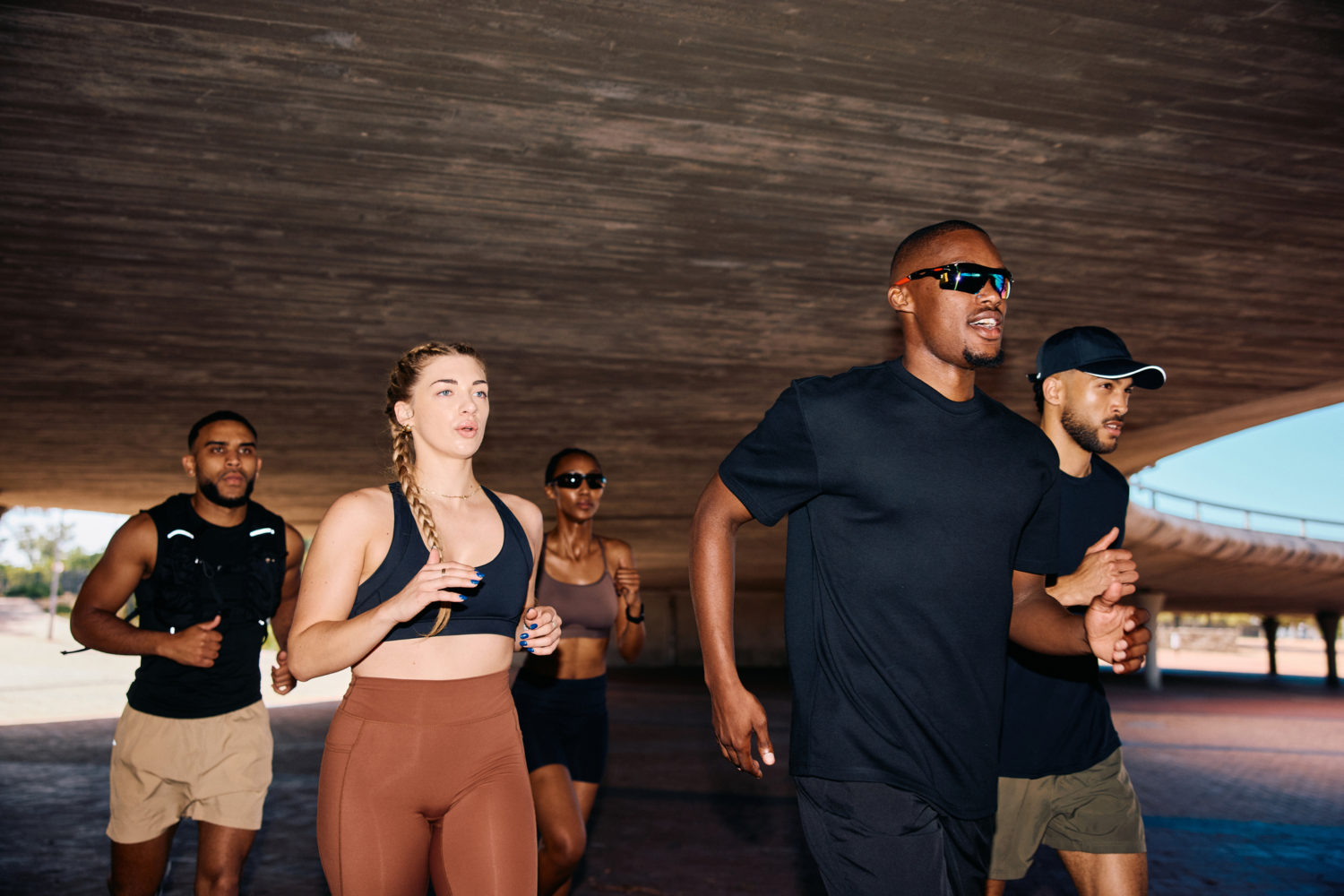
Currie isn’t the only one chasing the pack. In recent years, running clubs have exploded across North America, and brands have taken notice. Part social club, part group fitness, part dating pool, their members are an increasingly receptive market for companies open to solving their specific needs. Sneaker brands like Hoka and Nike, and athleisure labels like Lululemon, have launched their own clubs. But they’re not alone: in New York, an apple company sponsored a club with a coffee social complete with free fruit, Netflix created a run club matchmaking game to promote their show Nobody Asked For This, and Goose Island even launched an exclusive beer for Chicago Marathon finishers. Each initiative shares the same goal: engaging an eager and diverse audience.
After the long, lonely years of the pandemic, run clubs became a way to reconnect—culminating in a boom year for run clubs worldwide in 2024. Fitness app Strava reported a 58 per cent rise in registered running clubs that year, and Canadian cities were no exception. Both the Toronto Marathon and the BMO Vancouver Marathon set sign-up records that year, while Athletics Ontario saw a 16 per cent uptick in runner registrations. The same desire for connection got Currie running in the first place: “We were a COVID company, and we thawed out with the rest of the world,” he says. “We were craving that human connection as a business the whole time.”
WakeWater began as an experimental project at Iconic Brewing Company in Toronto, which produces the popular Cottage Springs line of “better-for-you” boozy beverages. Sales staff needed a pick-me-up to survive long, 12-hour event stints, so employee Ben Tofflemire began mixing a low-calorie, high-caffeine brew in 50-litre kegs. The drink became a hit in the office but didn’t fit Iconic’s core alcohol business. Seeing its potential beyond the brewery, Iconic Brewing Company spun it off into its own energy drink company, and Currie joined as co-founder in January 2021 after being introduced through mutual friends. WakeWater initially tried competing in the energy drink market with coffee, tea and Red Bull, positioning itself as a hyper-healthy, stripped-down alternative with the kick of a cup of joe, but it didn’t stick.
After Currie cramped up in his marathons, however, he saw an opportunity. WakeWater was already selling a powdered drink mix version of their energy drink, so an electrolyte version was a natural next step. When the first edition launched in 2024, Currie knew exactly where to test it: the running clubs he attended several times a week. He began mentioning WakeWater to fellow joggers, and by January 2025, was bringing samples to group runs.
The running community is tight-knit and always trading product recommendations–shoes, gels, drink mixes–anything to shave minutes off a marathon or make the miles easier. Currie had already learned the value of showing up for niche communities, from his first job out of school selling Duracell batteries for Procter & Gamble in Woodstock, Ontario, where he chatted with auto enthusiasts at local meets. When he started asking run-club owners if he could join with samples, some were skeptical at first. But they softened when they saw he was a runner himself. Soon, members were introducing him to organizers of other groups. By July, his weeks were fully booked. By the end of August, the four-person WakeWater team hired extra help to lighten his load.
As it grows, running clubs remain central to WakeWater’s strategy. The challenge is maintaining those personal connections to consumers as it expands to Montreal, Calgary and Vancouver—cities where Currie and his colleagues don’t live. To solve this, the company tapped local running leaders as ambassadors, sending them free products to share with their communities. Currie says the goal is for them to play the same role as he did in Toronto, spreading the brand through their local networks. Back home, WakeWater recently hired Monalisa Maposa as community manager after meeting her at a run club. She now oversees their social media and run-club marketing efforts. The company has also become the “hydrator in residence” for Queen West Runners, a group that meets weekly at a downtown Lululemon.
With Maposa working full-time, WakeWater has tapped into the run-club social media scene. At events, one team member films while another interviews participants about their training hacks. They also riff on trending moments like Taylor Swift in Toronto or the Toronto Blue Jays chasing the World Series. While those videos draw the most engagement, Currie prefers their everyday run club posts. “It’s closer to what social media was supposed to be,” he says. “It makes this whole business environment feel like just hanging out with your friends.” It’s good business, too: run club posts perform 22 per cent more than their account average.
Currie’s big bet is that the free product he’s handing out will pay off. While it’s hard to determine what marketing spend drives revenue, he’s confident the samples work. WakeWater now partners with roughly 25 run clubs and has reached about 30,000 runners over the past 18 months, during which sales have increased by 460 per cent company-wide. To build on that momentum, the company plans to increase its giveaway budget to support its growth. This year, it’ll distribute $100,000 worth of product as samples at cost, while spending just $15,000 on event fees at small-scale runs and races.
Related: Why Karen Danudjaja Went All in on Functional Beverage Brand Blume
To work with running clubs, Currie says businesses must sell a product or service that solves a specific problem for the community. “It doesn’t make sense to sell screwdrivers to yoga studios,” he says. He adds they need to show up authentically within that community. If he were selling a nutrition gel, for instance, he would target cyclists by hanging out in places where Toronto speed cyclists ride, chatting them up about their bikes and upcoming races.
Currie’s strategy is also time consuming. In the early stages, every customer is won through hours of standing—or running—outside, talking to people and making personal connections. That’s not for everyone. But when it works, it can fuel significant growth. “If you can do that, going deep is a good way of doing business,” says Currie. “Tight-knit communities talk and spread the word. They become your core.”