
The Case for Steady Growth

When Laura Thompson met Connie Lo for sushi in November 2016, she didn’t realize she was meeting the future co-founder of her multi-million dollar skincare business. A recent chemical engineering graduate from the University of Toronto with a restless entrepreneurial spirit, Thompson had already run a retail bookstore and a College Pro house-painting franchise. Those experiences taught her two things–she hated painting, and she didn’t want to run her next business alone. She wanted someone to share the workload and keep her motivated.
She kept coming back to the idea of a natural skincare line that cut through the empty eco-friendly claims she saw everywhere. Thompson noticed many brands greenwashing, claiming to be clean, natural, and sustainable without anything to back it up. “It was just a marketing gimmick,” she says. “When I found a product that was actually natural or had the ingredients I wanted, it was either too expensive or just didn’t work.” Thompson saw the need for something different in the market.
That frustration turned into an idea–and when a mutual friend introduced her to Connie Lo, she knew she had found the perfect match to pursue it. Lo had been making her own skincare products since developing acne in middle school. What started as a quick bite stretched into a three-and-a-half-hour conversation–and soon after, they were in business.
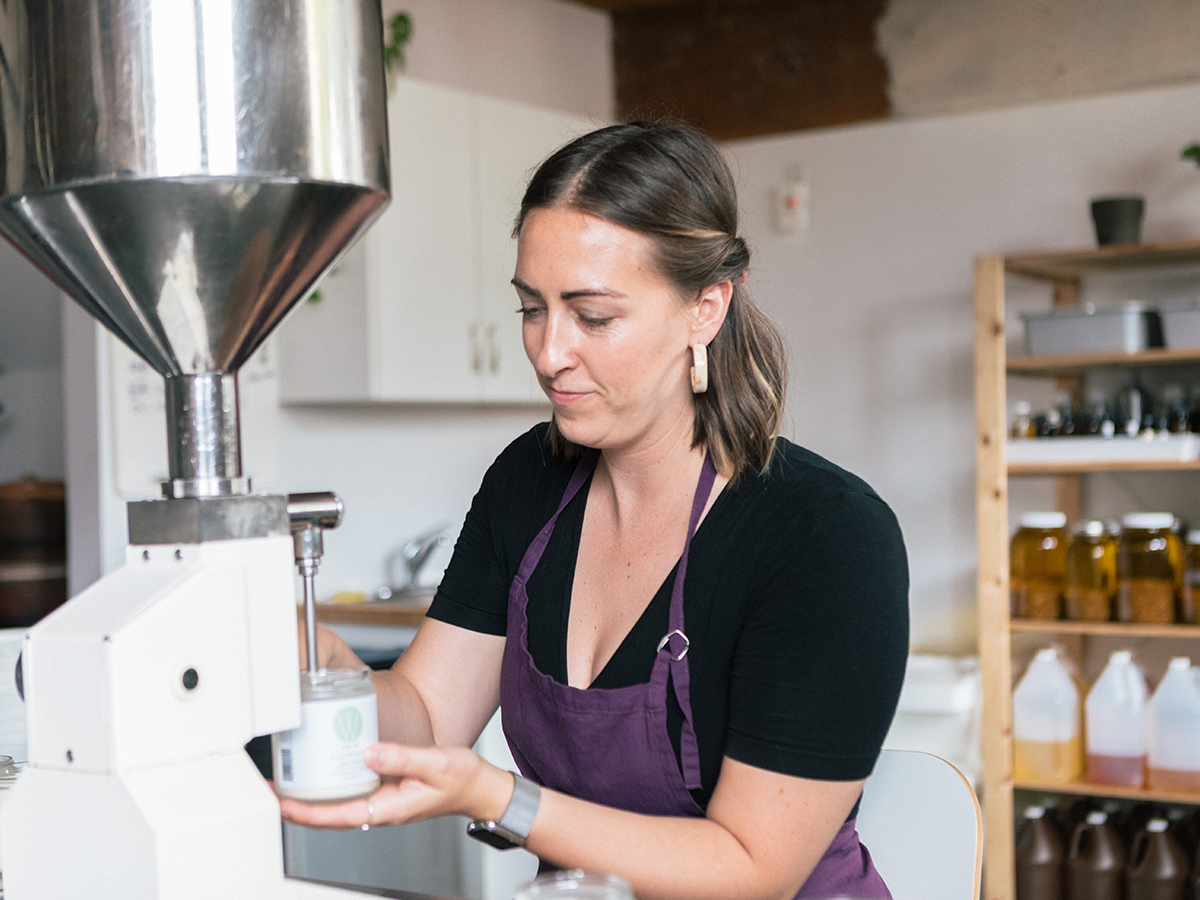
Starting with $4,000 in bootstrapped funds, they created Three Ships in 2017 to provide the effective, accessible products they struggled to access as consumers. They went from mixing skincare formulas in stainless steel bowls and selling at farmers’ markets to reaching $100,000 in sales within two years and establishing a full-fledged e-commerce company. By 2019, revenue had surpassed the $1 million mark–a milestone few startups ever reach.
But the co-founders never shook the sense that the ground beneath them was unstable. They were paying themselves about $1,500 a month–less than minimum wage. The company rebranded to Three Ships in 2020 after internal data revealed their customers’ ages skewed older than expected—closer to 25 to 45 than 18 to 30—forcing them to pivot the cheeky, playful voice of their former brand, Niu Body. They were also in constant fundraising mode, burning through cash to cover operating costs and fuel growth.
Then, the unthinkable happened: Thompson was diagnosed with brain cancer. “I started wondering, ‘Is continuing down this unknown path of entrepreneurship the right thing?’” she recalls. But she and Lo felt they couldn’t slow down. The day following her diagnosis, they were scheduled for a pitch competition, which Lo ended up attending alone. “It felt so strange talking about our accolades on stage,” says Lo. “In the back of my mind, I didn’t even know what the future held.”
For years, the startup playbook has followed one mantra: grow at all costs. Amazon CEO Jeff Bezos put it bluntly: “Get big fast.” He believes that investing heavily into early expansion is more important than focusing on profits since a company’s size is key to negotiating better prices from suppliers. Over the past decade, some venture-backed founders have bought into this thinking by trading red ink for market share and headlines, hoping to secure the next funding round to keep their growth going.
But as layoffs mount and once-hyped start-ups shutter, another approach is gaining ground: slow, sustainable growth. Take e-commerce giant Shopify, which recently announced a shift away from rapid expansion. The company is now focusing on building dependable recurring revenue and demonstrating that healthy profit margins can coexist with ongoing product innovation. Similarly, Stripe has dialled back its once intense expansion to prioritize efficiency within its core payments business. Research of the U.S. start-up ecosystem supports this thinking: scaling too quickly often leaves companies overextended or vulnerable to market shifts, while deliberate growth tends to build resilience.
While Three Ships appeared successful, with rising sales and new retailers like Whole Foods signing on, the reality was different. Thompson admits they were close to going bankrupt due to weak fundamentals like unhealthy product margins and unrealistic pricing. By the end of 2022, they decided to make the business more sustainable.
The first step was refocusing the business on profitability, rather than chasing top-line growth. Put simply, they shifted from prioritizing total sales to what remained after covering costs. As a result, they laid off much of their marketing team and set strict guardrails for themselves–every account, promotion, and tool had to justify its return. Monthly team reviews identified profitable decisions, with spending closely monitored against sales. To reinforce this approach, the founders started sharing EBITDA (Earnings Before Interest, Taxes, Depreciation, and Amortization) figures with the entire team–a measure of profitability to show how a business is performing at its core. Lo says this transparency made everyone more mindful of spending as they saw the direct impact of their choices.
But the co-founders say developing a more sustainable business should also go beyond relying on vanity metrics, such as oversized teams, impressive sales figures, or sizeable social media followings, which look impressive but don’t guarantee stability. For example, they say they’ve learned not to get caught in endless product launches, finding that three to four per year is their “sweet spot,” says Thompson. “Anytime we try to do more, it just doesn’t work. You end up spinning your wheels, wasting time and money keeping up with trends, and putting out products that don’t perform well.”
The shift ultimately succeeded in reshaping company culture. While before they struggled to stay accountable to budgets, employees now encouraged to “think like owners” were more likely to treat every dollar with care. Some even go to great lengths to save small amounts. Thompson recalls one instance where the operations manager successfully disputed $400 in label charges with Canada Post.
Some potential investors were initially unenthused by the shift in approach, opting out in favour of startups with higher revenue projections. One prospective backer pushed hard to join a funding round, urging them to pursue explosive growth and become “the next Estée Lauder.” At one point, he even offered what amounted to a blank cheque. On paper, it was tempting, but it clashed with Thompson and Lo’s vision. From the outset, they never aimed for a billion-dollar initial public offering.
But the rejections came with an unexpected upside. For the co-founders, saying no felt just as powerful as saying yes. “It was honestly cool to say no to investors,” Thompson says–a contrast to the early days when they were the ones being passed over. This continued for years of sustained growth until something changed. The lingering effects of the COVID-19 pandemic and a cooling investment market made “growth at all costs” look increasingly reckless. Suddenly, the playbook that once won startups headlines and blank cheques was causing brands to burn through cash and investors to pull out of deals.
Related: How Tanya Taylor Became a Leader in the Slow Fashion Movement
Against that backdrop, Three Ships stood out. The same investors who had once dismissed their focus on EBITDA and profitability were circling back. By 2024, they were pitching themselves to the company, eager to buy in. Despite tighter spending, the business was still expanding at an enviable pace.
This year, it’s forecasting $16 to $20 million CAD in top-line revenue, with EBITDA figures between eight and twelve per cent. Thompson and Lo credit their success to sustainable growth. “There’s a way to grow sustainably and still have exciting numbers,” says Thompson, whose health has been stable for six years now. “You just have to be militant about your processes and disciplined with expenses.”